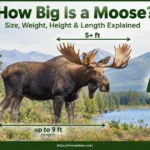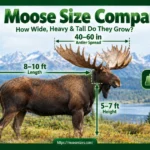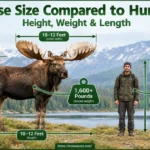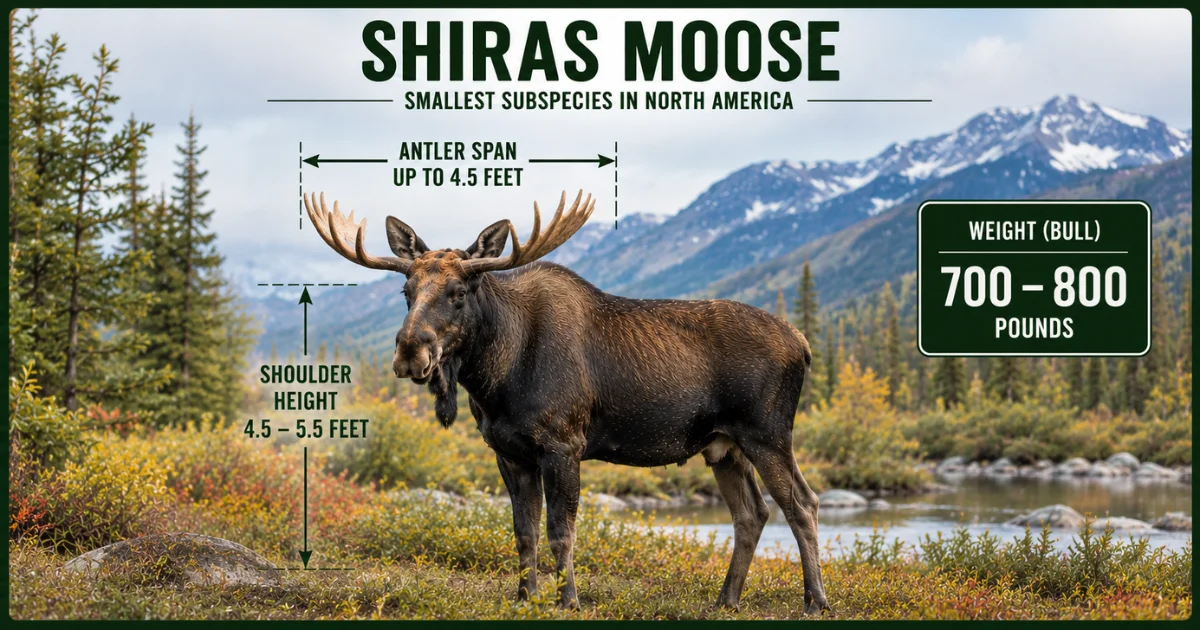
A full-grown Shiras moose bull weighs 900 to 1,200 pounds and stands 5.5 to 6 feet tall at the shoulder.
The Shiras moose is the smallest moose subspecies in North America. A mature bull can weigh over 1,000 pounds and stand close to 6 feet tall at the shoulder. Even as the “little” moose, it still dwarfs an elk or a horse.
How Big Is a Shiras Moose?
Shiras Moose Weight (Bulls vs. Cows)
Bulls are noticeably heavier than cows. Research from Alberta found adult bulls typically range from 868 to 1,076 pounds, while cows run lighter at 768 to 973 pounds. Weight also swings with the season — bulls can lose a startling amount of body mass during the fall rut, since breeding takes priority over eating.
Shiras Moose Height at the Shoulder
Shoulder height is where moose size is officially measured, not head height. Shiras bulls stand 36 to 55 inches at the shoulder in most measurements, though many wildlife agencies round this up to 5.5 to 6 feet for a mature bull. That’s still taller than most riding horses.
Body Length and Overall Build
A Shiras moose can stretch close to 9 feet from nose to tail, with the tail itself making up only a few inches of that length. The body is long, narrow through the chest, and set on long legs — a build made for wading through deep snow and brush, not for speed on flat ground.
More Posts: Alaska Yukon Moose Size, Weight, Height, Length & Antlers
Shiras Moose Antler Size
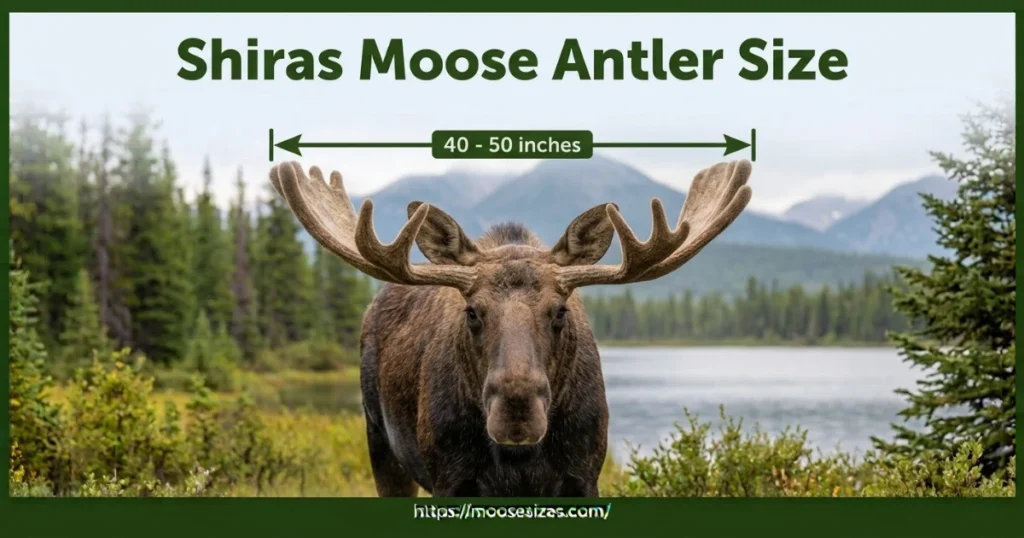
Shiras moose antler size typically spreads 40 to 50 inches tip to tip. This is smaller than every other moose subspecies, but the antlers are still massive compared to any other North American deer species.
Average Antler Spread
A typical mature Shiras bull carries an antler spread of 35 to 45 inches, with six or seven points on each side. The palms — the flat, shovel-like part of the antler — usually run about 6 inches wide on an average bull.
Record and Trophy-Class
Trophy-class Shiras bulls push antlers to 45 to 50 inches wide, with nine or more points per side and palms stretching 8 inches wide and 25 to 30 inches long.
A bull this size can score well over 155 on the Boone and Crockett scale for rifle hunters, and above 115 for archers using the Pope and Young system.
How Antler Size Changes With Age and Season
Antlers grow fresh every year, starting as soft velvet-covered tissue in spring and hardening by late summer. A bull typically reaches peak antler size between 6 and 10 years old.
Once the rut ends in late fall, testosterone drops and bulls shed their antlers completely, usually by early winter.
More Posts: Moose Sizes by Species: Weight, Height & Length
Shiras Moose Brain Size
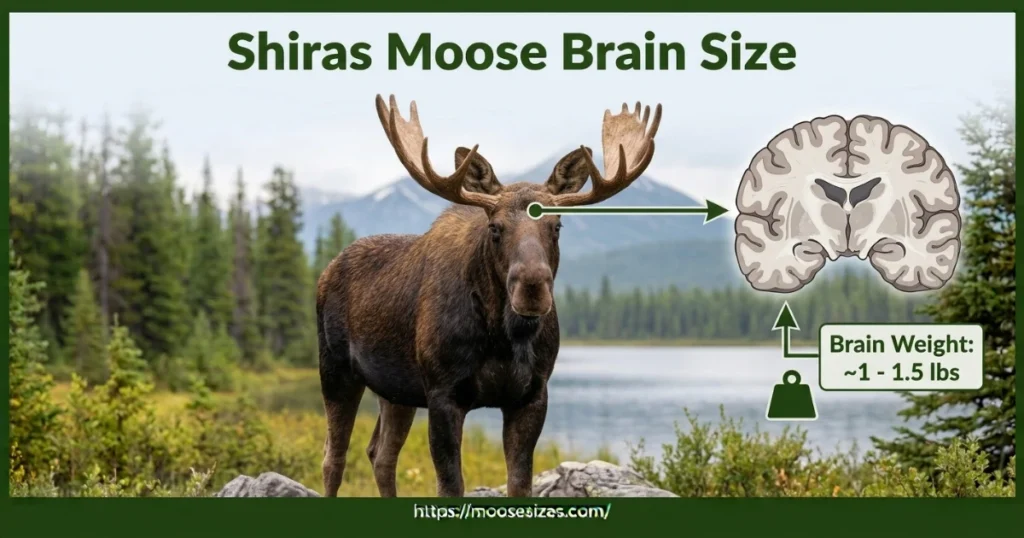
A moose brain weighs roughly 1 to 1.5 pounds — small compared to its 1,000-pound body. This is a detail most hunting and wildlife sites skip, but it explains a lot about moose behavior.
How Large Is a Moose’s Brain Relative to Body Size?
Compared to body mass, a moose’s brain is proportionally tiny — a fraction of a percent of total body weight. Large-bodied herbivores generally have small brain-to-body ratios, since their nervous systems focus on processing smell, sound, and basic motor coordination rather than complex problem-solving.
Why Brain Size Matters for Antler Growth and Behavior
A moose’s brain sits close to the antler pedicles, the bony bases where antlers attach and regrow each year. This physical closeness is part of why head injuries can sometimes affect antler development.
Brain size also connects to behavior — moose rely heavily on smell and hearing, not sharp reasoning, to detect danger. This is one reason a spooked moose reacts with instinct — running, bolting, or coughing in alarm — rather than caution or hesitation.
Shiras Moose Size Compared to Other Moose Subspecies
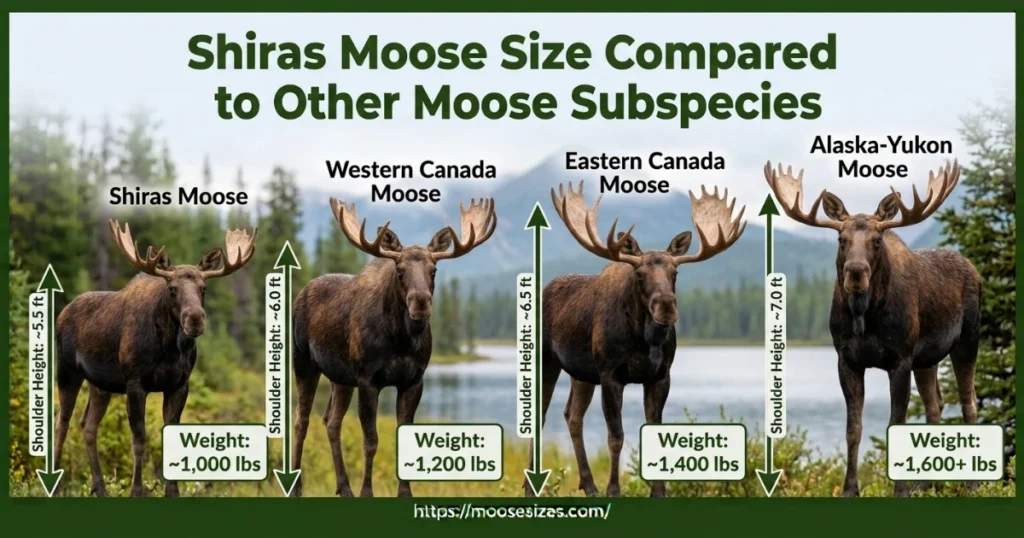
Shiras Moose vs. Alaskan (Yukon) Moose Size
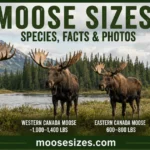
The Alaskan moose is the giant of the family. Bulls can weigh 1,200 to 1,600 pounds, stand 6 to 7 feet at the shoulder, and grow antlers spanning up to 6 feet. That’s roughly 400 to 600 pounds heavier than a Shiras bull, with antlers nearly a foot and a half wider.
Shiras Moose vs. Eastern Moose Size
The Eastern moose, found across New England and eastern Canada, weighs up to 1,400 pounds and stands around 6.5 feet tall. It’s the third-largest subspecies, sitting well above the Shiras in both weight and shoulder height.
Shiras Moose vs. Western (Canadian) Moose Size
The Western (Canadian) moose often tops 1,400 pounds and stands over 6 feet at the shoulder, with antlers ranging 40 to 60+ inches.
Outfitters who guide both species note that Canadian moose also behave differently — they favor swamps and lowland cover, while Shiras moose stick to high mountain basins and alpine slopes.
Factors That Affect Shiras Moose Size
Diet, Habitat, and Range
Shiras moose live across Utah, Wyoming, Idaho, Montana, Colorado, Washington, and parts of British Columbia. Their diet — mostly willow, aspen, sagebrush, and aquatic plants — directly affects body condition and antler growth.
Moose in nutrient-rich mountain basins with year-round browse tend to grow larger racks than those in drier, less productive terrain.
Age, Genetics, and Bull vs. Cow Differences
Size builds with age. A bull won’t reach his largest antler spread until his mid-to-late years, and genetics set the ceiling for how wide and heavy that rack can eventually grow.
Cows never grow antlers at all, and their smaller frame reflects a different energy priority — raising a calf rather than competing for mates.
More Posts: Bull Moose Size, Weight, Height, Length & Comparisons
FAQ’s About Shiras Moose
Is the Shiras moose the smallest moose subspecies?
Yes. The Shiras moose is the smallest of the four North American moose subspecies in both body weight and antler spread.
How much does a full-grown Shiras moose bull weigh?
A mature Shiras bull typically weighs between 900 and 1,200 pounds, depending on age and season.
What is considered a trophy Shiras moose antler size?
A trophy-class Shiras bull carries antlers spreading 45 to 50 inches wide, with nine or more points per side.

Hi, I’m Natalie Collins, the admin at MooseSizes.com. We simplify animal sizes, measurements, and wildlife comparisons with easy-to-follow guides, useful size charts, and accurate information to help you understand animal dimensions with confidence.