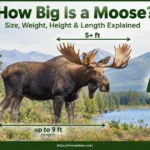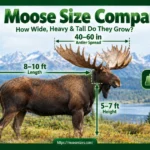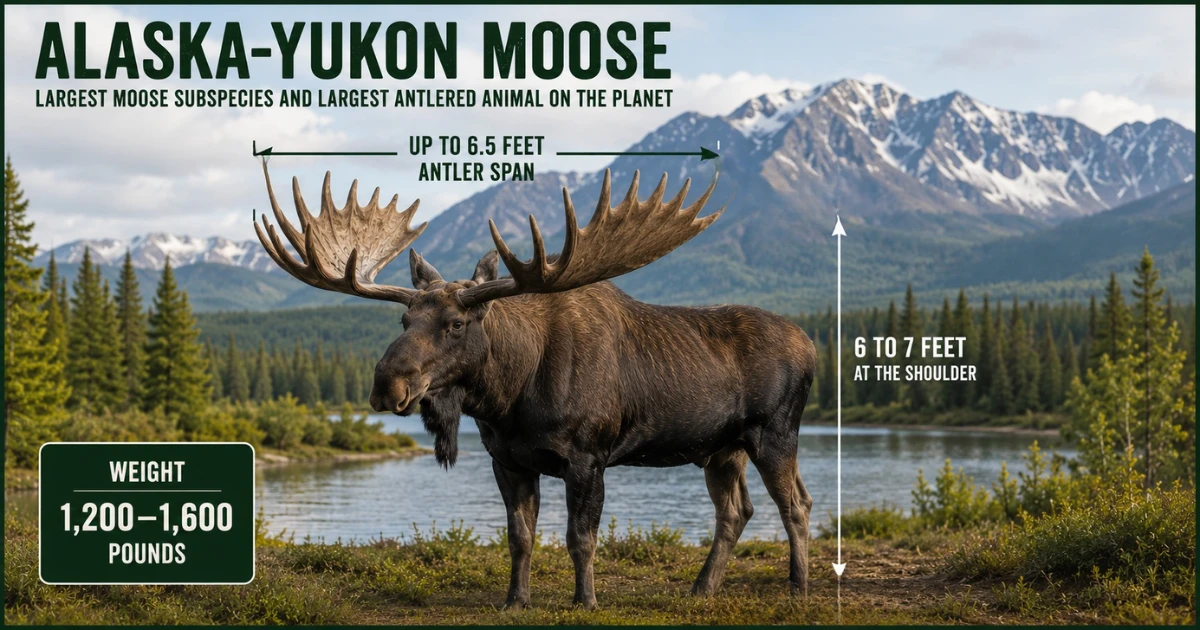
Alaska Yukon moose size: Bulls weigh 1,200–1,600 lbs, cows weigh 800–1,300 lbs, stand up to 6–7 feet tall at the shoulder, and carry antlers spanning 55–75 inches wide.
The Alaska Yukon moose is the biggest moose on Earth. It is also the largest member of the deer family, period. It is also known for its long body, powerful build, and exceptionally large antlers.
How Big Is an Alaska Yukon Moose?
Alaska Yukon Moose Weight — Bulls vs. Cows
Male moose, called bulls, are much bigger than females.
A large bull can weigh 1,200 to 1,600 pounds. A cow, or female moose, usually weighs 800 to 1,300 pounds. That is still heavier than most horses.
Newborn calves start small. They weigh only about 28 pounds at birth. Within five months, they can grow to ten times that size.
Alaska Yukon Moose Height
A mature bull stands about 6 feet tall at the shoulder. Some big bulls get close to 7 feet.
That height puts a bull’s shoulders at eye level with a tall adult human, before you even count the head and antlers.
Alaska Yukon Moose Body Length
| Measurement | Size |
|---|---|
| Weight | 800–1,600 lb |
| Shoulder Height | Up to 6–7 ft |
| Body Length | 8–10 ft |
| Lifespan | Up to 16 years |
Alaska Yukon Moose Antlers Size
Average Antler Spread
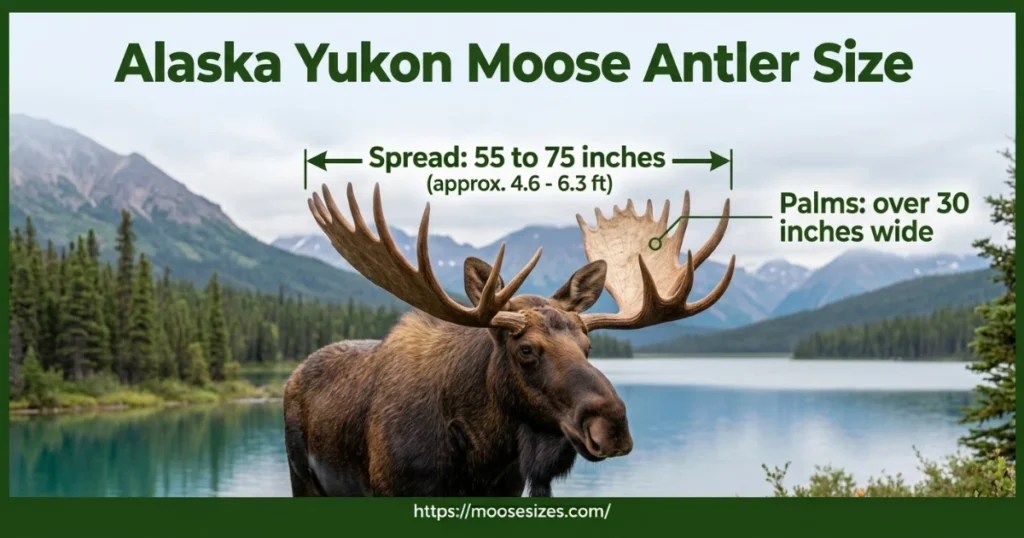
A mature bull’s antlers commonly spread 55 to 75 inches across. That is wider than most adult humans are tall.
Only bull moose grow antlers. Cows never do. The antlers start forming in the first year of life and regrow every single summer after that.
Weight and Palm Size
A full rack of antlers can weigh more than 60 pounds on its own. Add the skull, and a hunter or researcher is handling serious weight just from the head.
The wide, flat sections of the antlers are called palms. These palms can be broad enough that a grown man could not wrap both arms around them.
Record-Book Antler Sizes
The biggest antlers ever officially measured belong to a bull taken along the Lower Yukon River in Alaska in 2010. It scored 266 4/8 points, the current world record.
Most trophy-class bulls reach their peak antler size between 10 and 12 years old. Some reach trophy size as early as age 6.
More Posts: Shiras Moose Size, Weight, Height, Antlers & How It Compares to Other Moose
Alaska Yukon Moose Brain Size
How Big Is a Moose Brain?
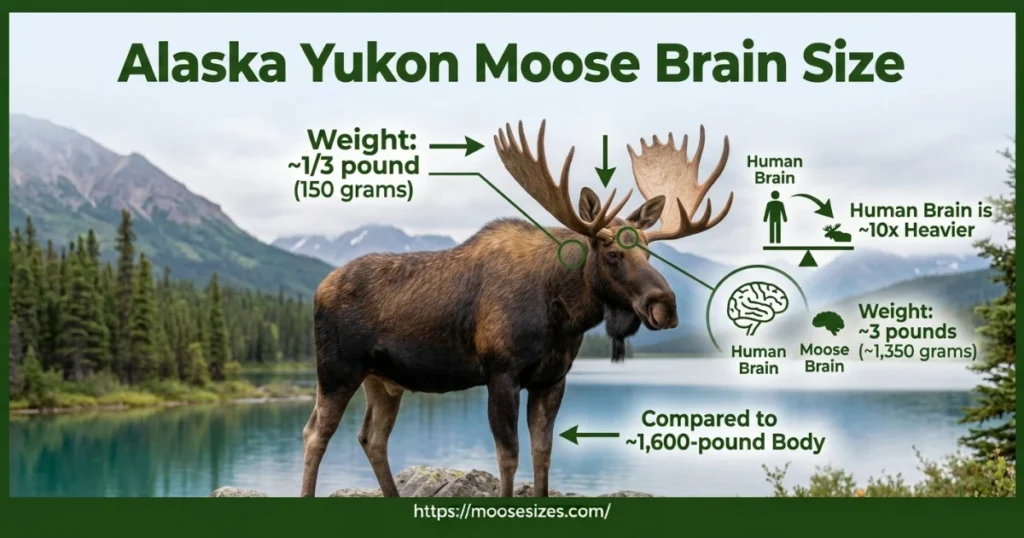
A moose brain weighs roughly one-third of a pound, or about 150 grams. That is small compared to the animal’s massive 1,600-pound body.
For comparison, a human brain weighs almost 10 times more, even though we weigh a fraction of what a moose weighs.
Brain-to-Body Size Ratio
The moose has one of the lowest brain-to-body ratios among large mammals. This is common in big herbivores that rely on smell, hearing, and instinct rather than complex problem-solving.
A small brain does not mean a slow animal. Moose react fast, run fast, and can be dangerous when startled or protecting young. Their senses do the heavy lifting, not brainpower.
More Posts: Bull Moose Size, Weight, Height, Length & Comparisons
Alaska-Yukon Moose Behavior, Diet, and Life Cycle
The Alaska-Yukon Moose Rut and Breeding Season
When do Alaska-Yukon moose breed? The rut happens in late September through early October. Bulls travel widely, searching for cows, and they’ll spar by locking antlers and pushing.
Alaska-Yukon Moose Diet and Feeding Habits
Moose are herbivores. In fall and winter, they browse heavily on willow, birch, and aspen twigs, sometimes creating a visible “hedge line” 6 to 8 feet off the ground where they’ve stripped the same bushes for years.
In spring and summer, their diet expands to include forbs, grasses, and aquatic plants pulled straight from shallow ponds.
Alaska-Yukon Moose Growth
A newborn calf weighs about 28 pounds. Within five months, it grows to roughly ten times that size. Cows usually breed for the first time around 28 months old, and after a gestation period of about 230 days, calves arrive in spring. In the wild, moose rarely live past 16 years.
Alaska Yukon Moose Size Compared to Other Moose
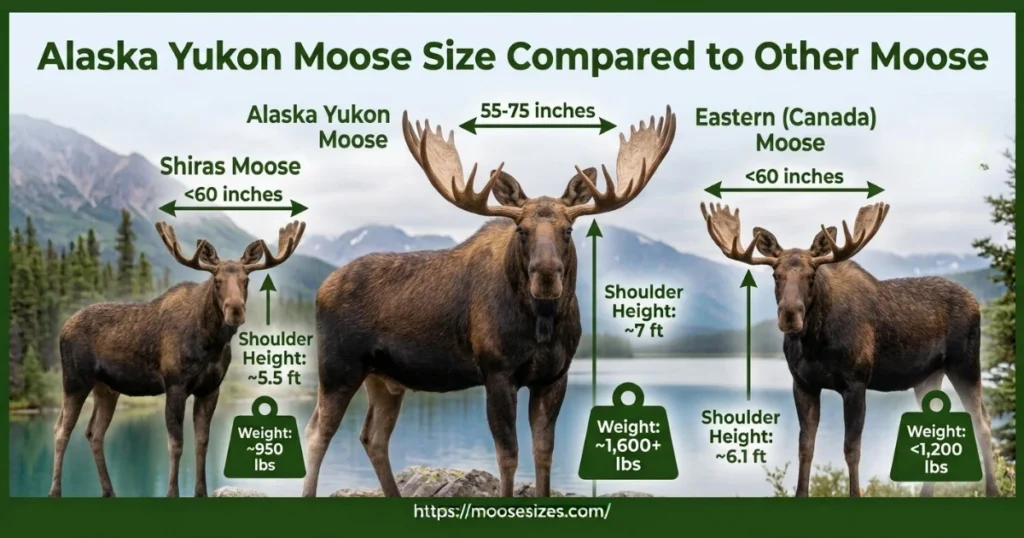
Alaska Yukon Moose vs. Shiras Moose Size
The Shiras moose is the smallest subspecies in North America. It lives in the Rocky Mountains and weighs roughly 800 to 1,100 pounds.
That means an Alaska Yukon bull can outweigh a Shiras bull by 500 pounds or more.
Alaska Yukon Moose vs. Eastern (Canada) Moose Size
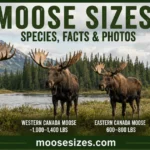
The Eastern moose, sometimes called the Canada moose, is mid-sized. Bulls typically weigh 900 to 1,400 pounds.
Antler spread also runs smaller, usually staying under 60 inches, compared to the Alaska Yukon moose’s 55 to 75 inch range.
Alaska Yukon Moose vs. European (Eurasian) Moose Size
The European moose, found across Scandinavia and Russia, is closer in size to the Eastern moose. Large bulls reach 1,200 pounds at most.
The Alaska Yukon moose still wins on raw size, weight, and antler mass across the board.
FAQ’s About Alaska Yukon Moose Size
What is the biggest Alaska Yukon moose ever recorded?
The world record bull scored 266 4/8 points and was taken along the Lower Yukon River, Alaska, in 2010.
How much does a full-grown Alaska Yukon moose weigh?
A full-grown bull can weigh between 1,200 and 1,600 pounds. Cows typically weigh 800 to 1,300 pounds.
How wide can Alaska Yukon moose antlers get?
Average antler spread runs 55 to 75 inches wide. Record antlers have been measured even wider.
Is the Alaska Yukon moose the biggest moose in the world?
Yes. It is the largest of all moose subspecies, both in body size and antler size.
How big is a moose’s brain compared to its body?
A moose brain weighs about one-third of a pound, which is tiny compared to its 1,600-pound body.

Hi, I’m Natalie Collins, the admin at MooseSizes.com. We simplify animal sizes, measurements, and wildlife comparisons with easy-to-follow guides, useful size charts, and accurate information to help you understand animal dimensions with confidence.