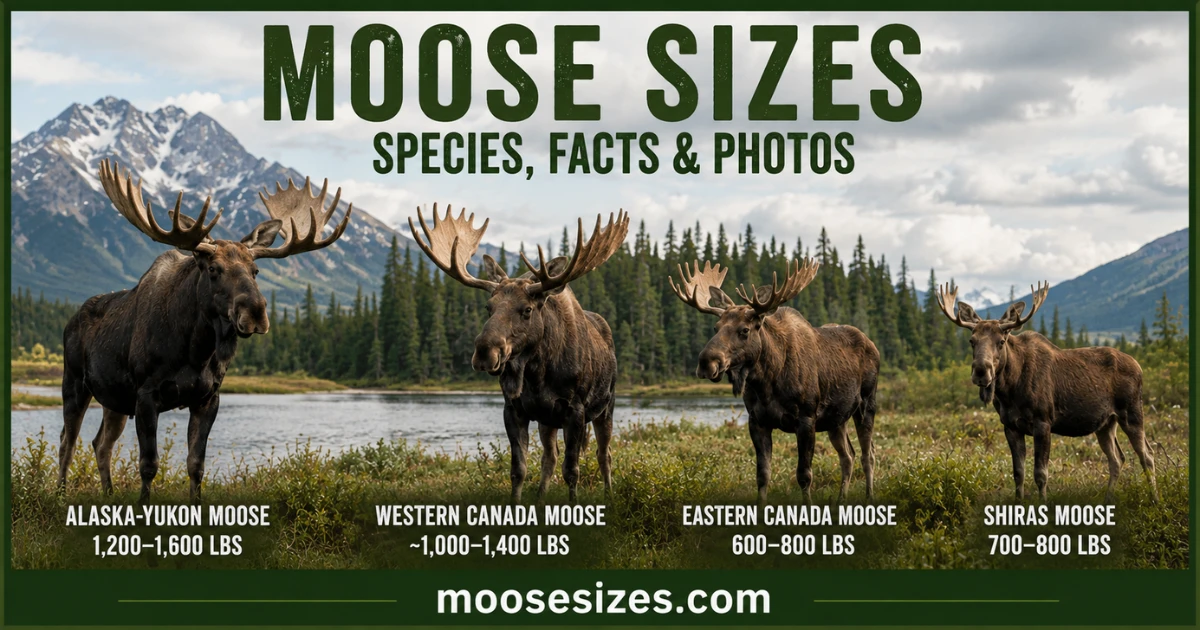
How Moose Size Varies by Region & Species
There are four main North American moose types: Alaska-Yukon, Western Canada, Eastern Canada, and Shiras moose.
They vary widely in size, weight, antler spread, and habitat, with the Alaska-Yukon moose being the largest and Shiras moose the smallest.
Standard Moose Size At A Glance
| Moose Measurement | Typical Size |
|---|---|
| Weight | 800–1,400 lbs (360–635 kg) |
| Shoulder Height | 5.5–7 ft (1.7–2.1 m) |
| Body Length | 7–10 ft (2.1–3.0 m) |
| Head & Body Length | 7.5–10 ft (2.3–3.0 m) |
| Antler Spread | Up to 6.5 ft (2.0 m) |
| Leg Length | About 3–4 ft (0.9–1.2 m) |
Moose Habits
Moose are mostly solitary animals, spending much of their time feeding on leaves, twigs, aquatic plants, and shrubs. They are strong swimmers and often stay near lakes, rivers, and wetlands. Most active at dawn and dusk, moose rest during the warmer parts of the day.
Moose Subspecies
Alaska-Yukon Moose
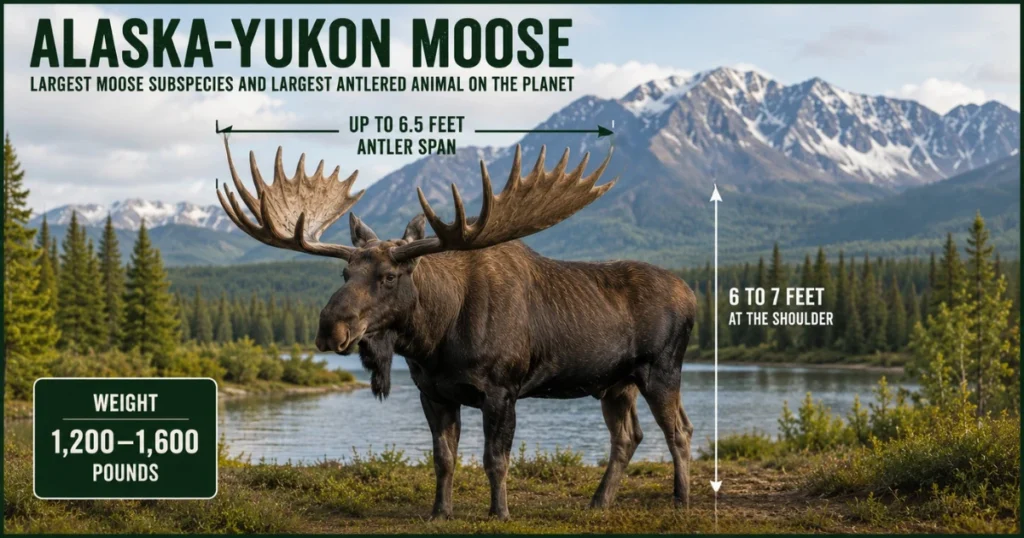
The Alaska-Yukon moose is the largest moose subspecies in the world — and the largest antlered animal on the planet. Bulls typically stand 6 to 7 feet at the shoulder and weigh between 1,200 and 1,600 pounds. Some giant bulls push toward the 70-inch antler mark, with spreads reaching 6.5 feet wide.
Eastern Canada Moose
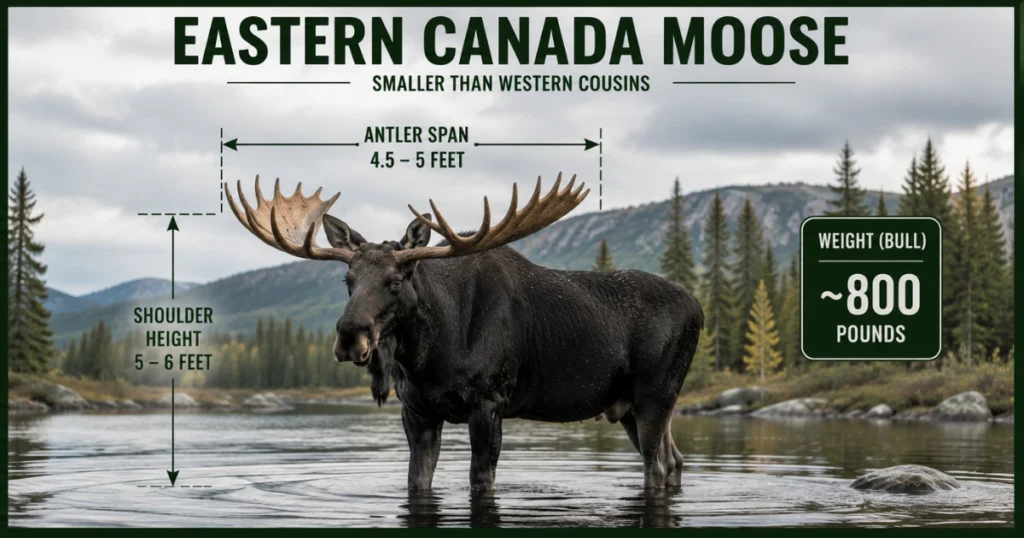
The Eastern Canada moose (Alces alces americana) is noticeably smaller than its western cousins. Bulls average around 800 pounds, while cows weigh closer to 600 pounds. Its coat runs darker — almost blackish-brown — and its antlers are smaller with less of the wide, palm-shaped spread seen on Alaska-Yukon bulls.
Western Canada Moose
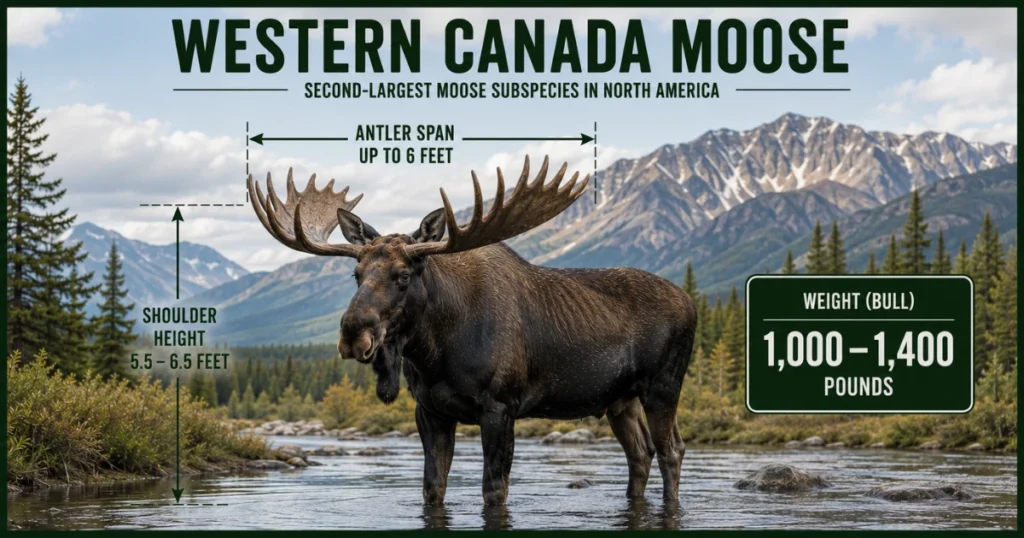
Ranking just behind the Alaska-Yukon moose, the Western Canada moose (Alces alces andersoni) is the second-largest subspecies in North America. Bulls run 1,000 to 1,400 pounds, with broad, palmate antlers spreading up to 6 feet.
Shiras Moose
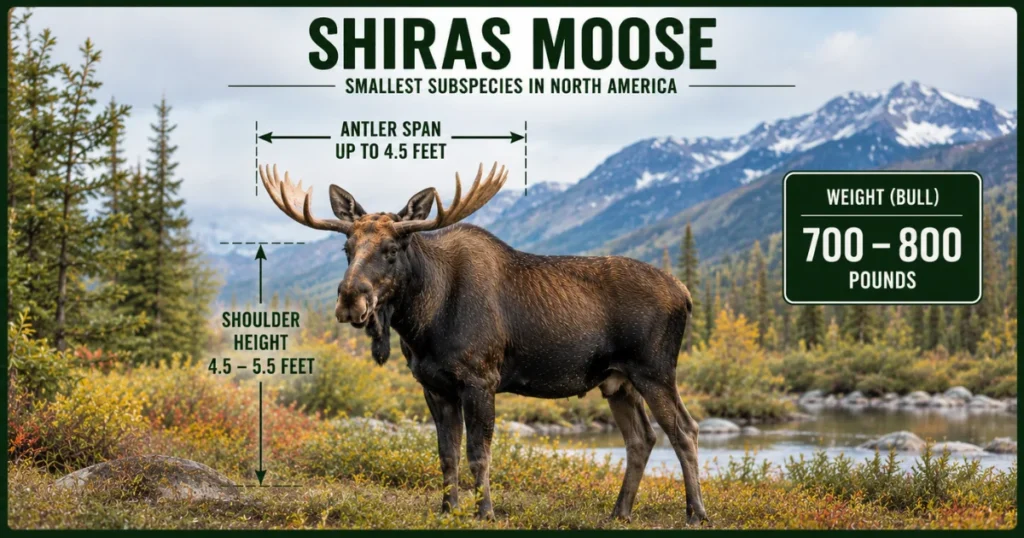
The Shiras moose (Alces alces shirasi) is the smallest moose subspecies in North America. Named after zoologist George Shiras III, bulls top out around 700 to 800 pounds — roughly half the weight of an Alaska-Yukon bull. Antler spread rarely exceeds 4.5 feet.
Moose Size Comparison
| Subspecies | Weight | Shoulder Height | Antler Span |
|---|---|---|---|
| Alaska-Yukon Moose | 1,200–1,600 lbs | 6–7 ft | Up to 6.5 ft |
| Western Canada Moose | ~1,000–1,400 lbs | 6–6.5 ft | Up to 6 ft |
| Eastern Canada Moose | 600–800 lbs | 6.5 ft | Smaller, less palmate |
| Shiras Moose | 700–800 lbs | 5.5–6 ft | Up to 4.5 ft |
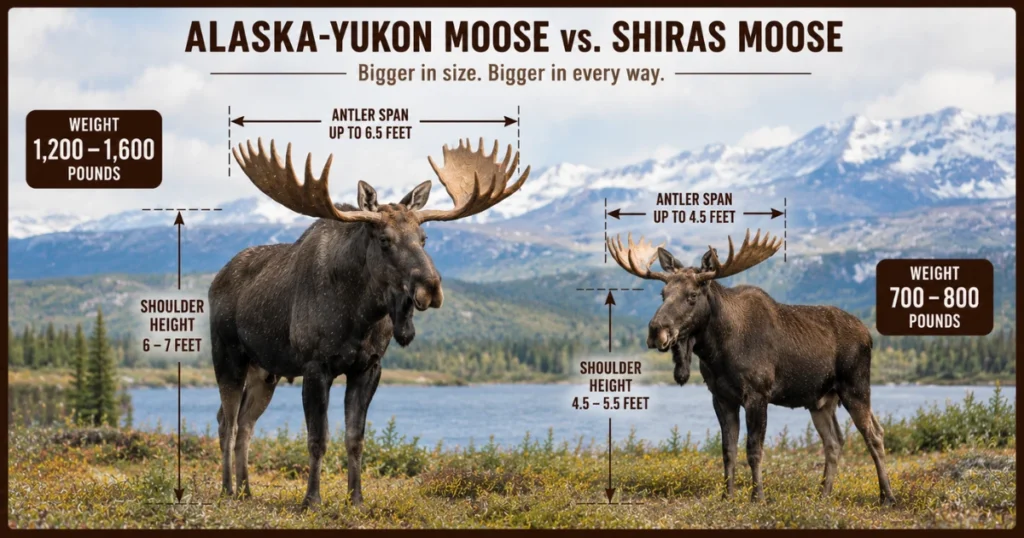
Alaska-Yukon Moose vs. Shiras Moose
The size gap here is dramatic. An Alaska-Yukon bull can weigh twice as much as a Shiras bull and carry an antler spread nearly 2 feet wider. Side by side, a Shiras moose would look almost like a different species — smaller frame, shorter legs, and a noticeably smaller rack.
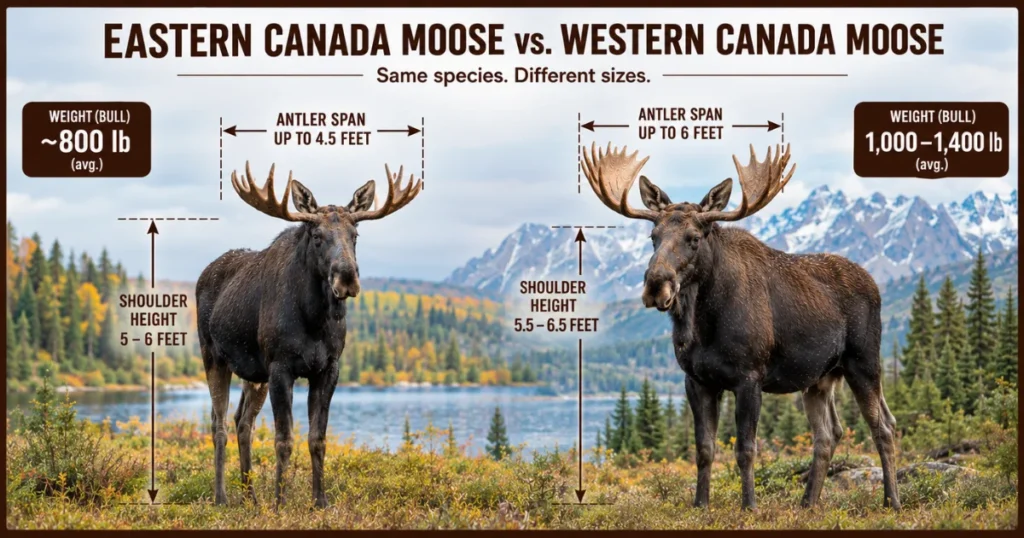
Eastern Canada Moose vs. Western Canada Moose
Despite sharing a country, these two subspecies aren’t close in size. Western Canada moose outweigh Eastern Canada moose by 400 to 600 pounds. The western subspecies also carries a wider, more palmated antler, while the eastern moose has a smaller, darker frame built for dense forest terrain rather than open backcountry.
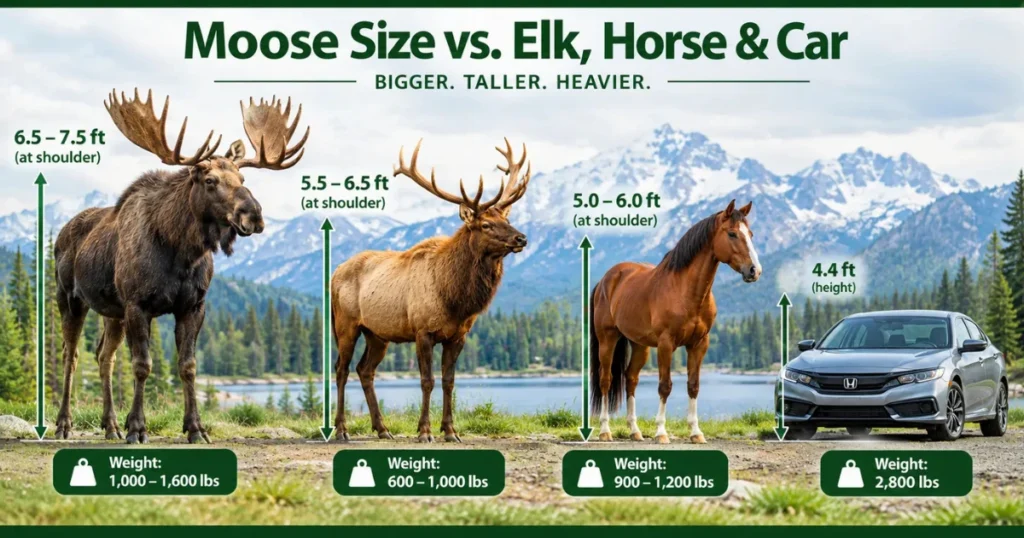
Moose Size vs. Elk, Horse & Car
- A bull moose is taller than the average horse at the shoulder.
- Moose can outweigh a small car, like a Honda Civic (roughly 2,800 lbs for the car, but a bull moose still stands taller than most sedans).
- Compared to elk, moose are heavier and taller, though elk often carry a wider antler spread relative to body size.
- A moose’s long legs let it step over obstacles nearly 3 feet high without breaking stride.
FAQ’s About Moose Size
How big is the average moose?
An average bull moose weighs between 800 and 1,600 pounds, depending on subspecies, and stands 6 to 7 feet tall at the shoulder.
What is the largest moose subspecies?
The Alaska-Yukon moose is the largest, with bulls reaching up to 1,600 pounds and antler spreads over 6 feet wide.
What is the smallest moose subspecies?
The Shiras moose is the smallest North American subspecies, with bulls averaging 700 to 800 pounds.
Why do moose sizes vary by region?
Colder climates favor larger body size for heat retention, following Bergmann’s Rule. Moose in Alaska and the Yukon grow much bigger than moose in warmer, southern habitats like Wyoming or Utah.
Are female moose smaller than males?
Yes. Cow moose typically weigh 20 to 30% less than bulls and don’t grow antlers.