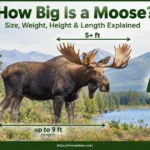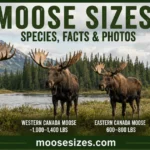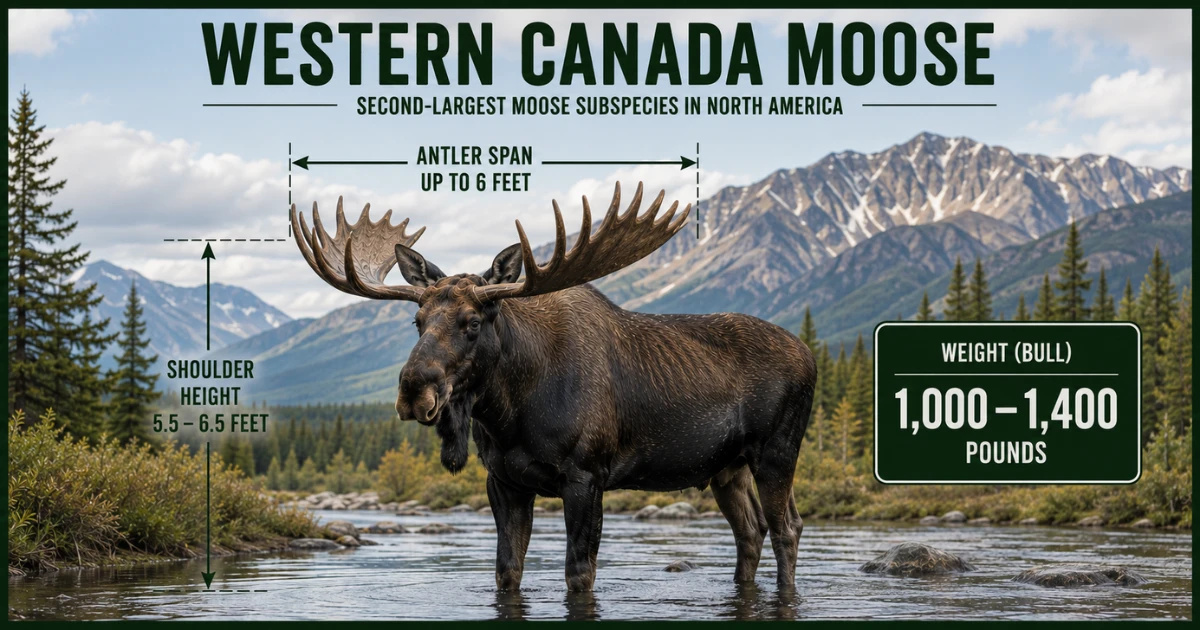
An adult western Canada moose weighs between 800 and 1,600 pounds and stands 6 to 7 feet tall at the shoulder.
The Western Canada moose is one of the biggest deer species walking North America today. If you’ve ever wondered just how large this animal gets, the short answer is: massive. Adult bulls can weigh over 1,500 pounds and stand taller than a grown man at the shoulder.
How Big Is a Western Canada Moose?
The Western Canada moose (Alces alces andersoni) ranks as the second-largest moose subspecies in the world, beaten only by the Alaska-Yukon moose. It roams British Columbia, Alberta, Saskatchewan, Manitoba, the Northwest Territories, and western Ontario.
Average Weight of a Western Canada Moose
A mature bull typically weighs between 1,000 and 1,500 pounds. Cows are lighter, usually falling between 600 and 800 pounds. Weight shifts with the season — bulls carry the most bulk in early fall, right before the rut burns off their fat reserves.
Shoulder Height and Body Length
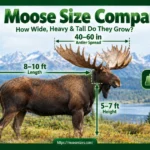
Bulls stand 6 to 7 feet tall at the shoulder hump, with some big-bodied individuals pushing close to 7.5 feet. Nose to tail, a large bull can stretch 9 to 10 feet long. That shoulder hump — a thick pad of muscle over the front legs — helps power the moose through deep snow and thick brush.
Western Canada Moose Antler Size
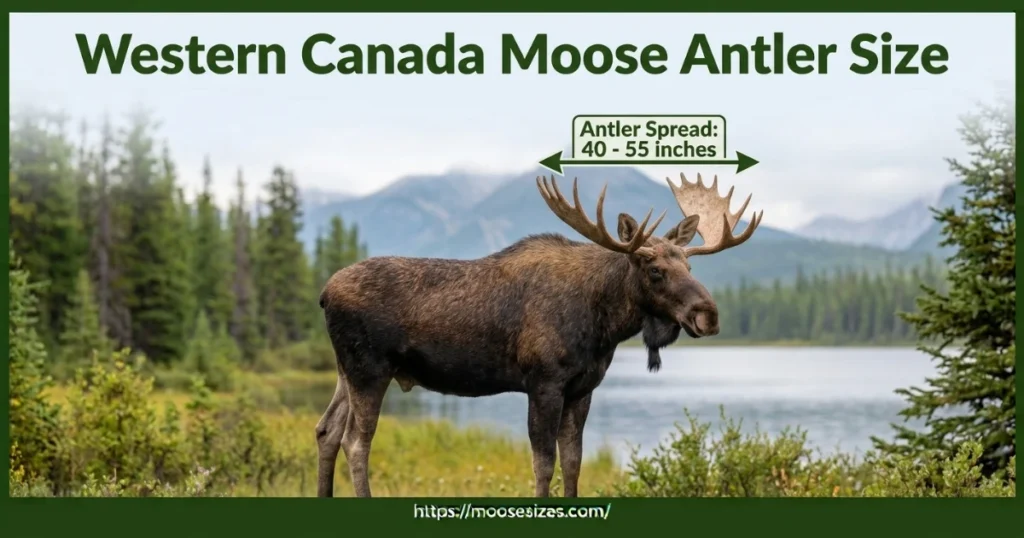
Average Antler Spread (Inches)
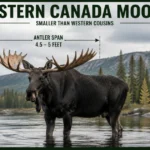
A mature bull’s antler spread usually falls between 40 and 55 inches, with true trophy bulls stretching out to 60 inches or more. In record-book terms, that puts Western Canada moose well ahead of Shiras moose but behind the giant Alaska-Yukon race.
Antler Shape, Palmation, and Point Count
Moose antlers grow in a flat, fan-like shape called palmation. Each side splits into a brow palm (the smaller front section) and a main palm (the larger rear section), with sharp points, or tines, sprouting off the edges. A dominant bull can carry 20 points or more across both sides.
What Affects Antler Size Year to Year
Antler growth depends on three things: age, nutrition, and genetics. Bulls hit peak antler size between 6 and 10 years old. A poor food year — say, a drought that limits willow and aspen growth — can shrink that year’s rack noticeably, even in an otherwise strong bull.
More Posts: Bull Moose Size, Weight, Height, Length & Comparisons
Western Canada Moose Brain Size
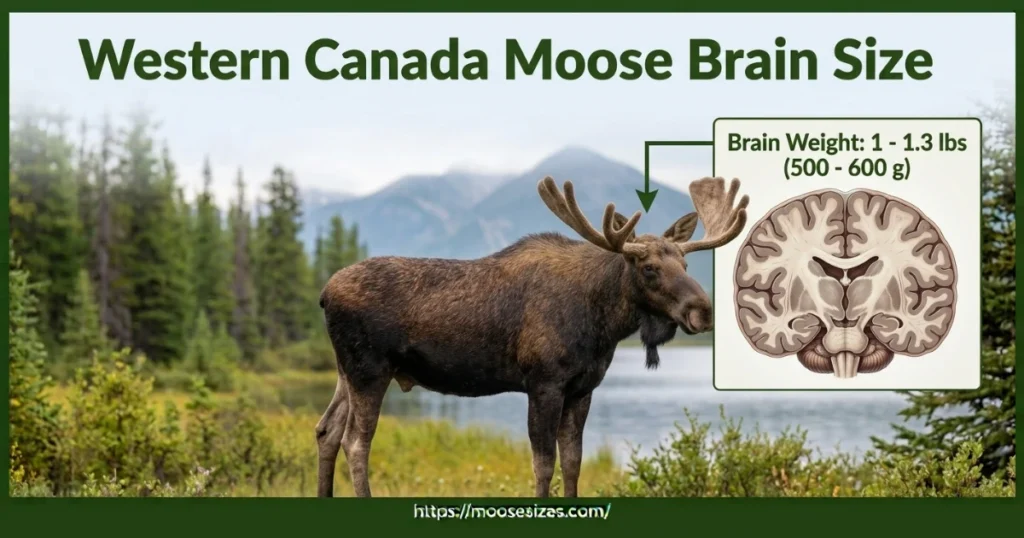
How Big Is a Moose’s Brain Relative to Its Body?
A moose brain weighs roughly 1 to 1.3 pounds (about 500 to 600 grams). That sounds substantial, but relative to a 1,200-pound body, it’s actually small — a tiny fraction of total body mass, similar to other large deer species like elk and caribou.
What Brain Size Means for Moose Senses and Behavior
A modest brain-to-body ratio doesn’t mean a moose is unaware. Their survival instincts are sharp: excellent hearing, a keen sense of smell, and a strong memory for terrain and danger zones. What moose lack in eyesight — their vision is genuinely poor, especially for stationary objects — they make up for with scent detection and caution. Brain size shapes instinct-driven behavior more than problem-solving; a moose relies on reflex and routine, not reasoning.
More Posts: Shiras Moose Size, Weight, Height, Antlers & How It Compares to Other Moose
Western Canada Moose Size Vs Other Moose Subspecies
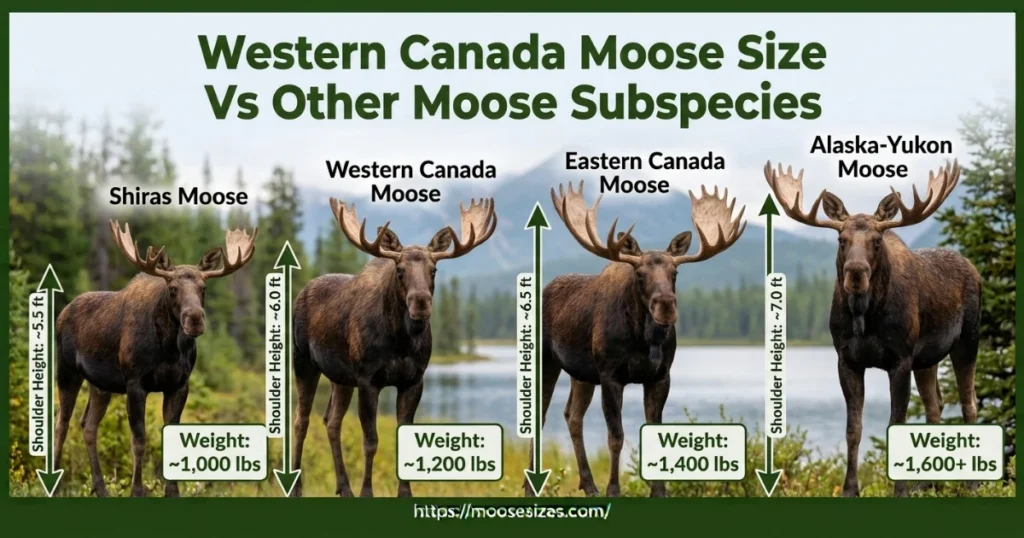
Western Canada Moose vs Alaska-Yukon Moose
The Alaska-Yukon moose is the undisputed heavyweight champion — bulls can top 1,600 to 1,800 pounds, with antlers spreading 65 to 75 inches. Western Canada moose are noticeably smaller in both body and rack, though still enormous by any other standard.
Western Canada Moose vs Eastern Canada Moose
The Eastern Canada moose (Alces alces americana) is the Western moose’s closest cousin, but it runs smaller — both in body weight and antler spread — and carries a darker, near-black coat. Eastern bulls also tend to have a reduced saddle area (the lighter patch of fur across the back and flanks).
Western Canada Moose vs Shiras Moose
The Shiras moose, found through the Rocky Mountains, is the smallest moose subspecies in North America. Bulls average just 900 to 1,200 pounds with antlers rarely exceeding 50 inches. Standing next to a Western Canada bull, a Shiras moose looks like a different animal entirely — even though they’re close relatives.
What Determines Western Canada Moose Size?
Habitat and Range
Moose living in lowland forests, bogs, and river corridors tend to grow larger because these areas offer consistent access to food and water. Western Canada’s mix of boreal forest and wetland habitat gives moose exactly that kind of steady environment.
Diet and Seasonal Nutrition
Moose are browsers, feeding heavily on willow, aspen, birch, and aquatic plants. A healthy moose can eat 40 to 60 pounds of vegetation per day during summer. Rich, varied forage directly fuels bigger body mass and stronger antler growth.
Age, Genetics, and Rut Condition
Bulls don’t reach full size overnight. Peak body and antler mass usually arrives around age 7 to 10, after which size can plateau or slowly decline. Genetics set the ceiling, but nutrition and age decide how close a bull actually gets to it.
More Posts: Moose Sizes by Species: Weight, Height & Length
FAQ’s About Western Canada Moose
How much does a Western Canada moose weigh?
A mature bull typically weighs 1,000 to 1,500 pounds, while cows weigh 600 to 800 pounds.
How tall is a Western Canada moose?
Bulls stand 6 to 7 feet at the shoulder hump and can measure up to 10 feet long.
What is the average antler spread of a Western Canada moose?
Most mature bulls carry antlers spanning 40 to 55 inches, with trophy bulls reaching 60 inches or more.
Is the Western Canada moose the biggest moose subspecies?
No. The Alaska-Yukon moose is larger. The Western Canada moose ranks second in size among North American moose subspecies.
How big is a moose’s brain?
A moose brain weighs about 1 to 1.3 pounds, small relative to its massive body size.

Hi, I’m Natalie Collins, the admin at MooseSizes.com. We simplify animal sizes, measurements, and wildlife comparisons with easy-to-follow guides, useful size charts, and accurate information to help you understand animal dimensions with confidence.