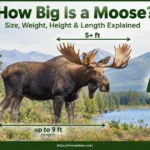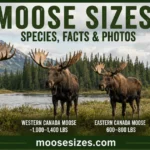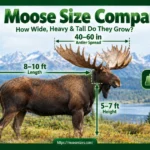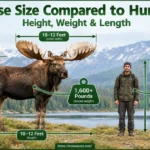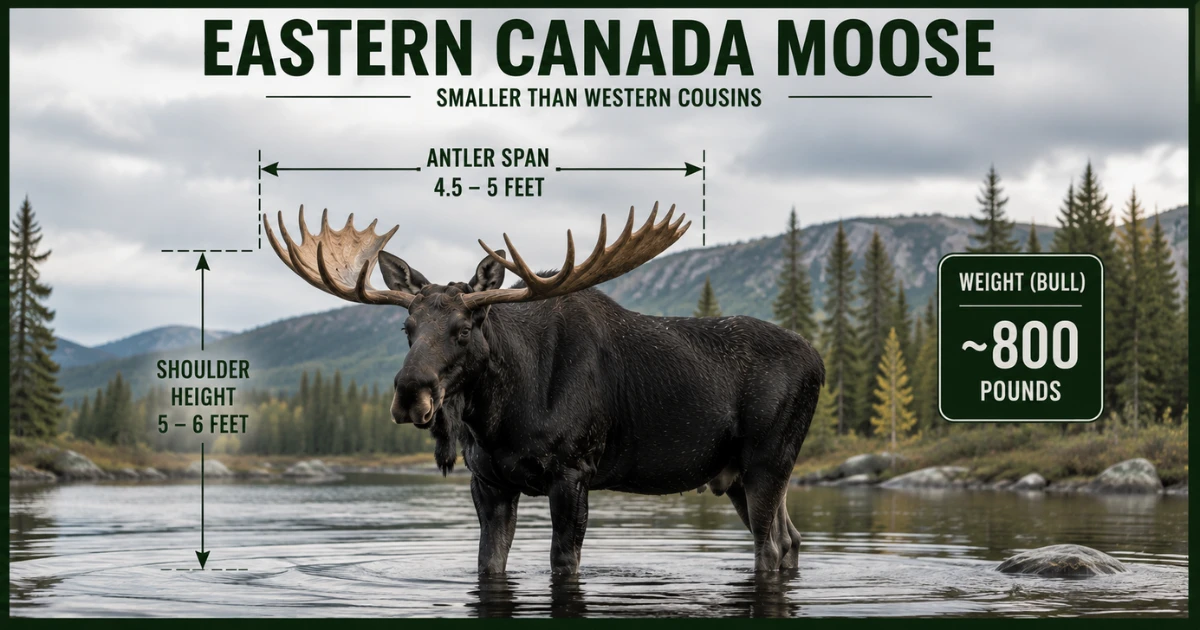
An adult eastern Canada moose weighs between 600 and 1,400 pounds and stands 6 to 7 feet tall at the shoulder.
The eastern Canada moose is one of the biggest deer species on the planet. If you’re researching eastern Canada moose size for a hunt, a wildlife report, or plain curiosity, this guide breaks down the real numbers — weight, height, antlers, and brain size — in plain language.
How Big Is an Eastern Canada Moose?
Average Weight of an Eastern Canada Moose
Bulls (males) sit at the top end of the scale, often topping 1,000 pounds. Cows (females) run smaller, typically 600 to 900 pounds. Weight swings with the seasons too — moose pack on fat through summer and early fall, then burn through those reserves during the harsh winter and the fall rut (mating season).
Average Height and Shoulder Hump Size
The eastern Canada moose stands 6 to 7 feet tall at the top of its shoulder hump — that raised bump behind the neck. This hump isn’t fat. It’s mostly muscle and long spinal bones called vertebral processes, which give the moose extra leverage to swing its heavy head and antlers.
Average Body Length
Nose to tail, a mature bull can stretch up to 10 feet long. Combined with those long, stilt-like legs, the moose is built to wade through deep snow, swamps, and thick brush without slowing down.
Eastern Canada Moose Antler Size
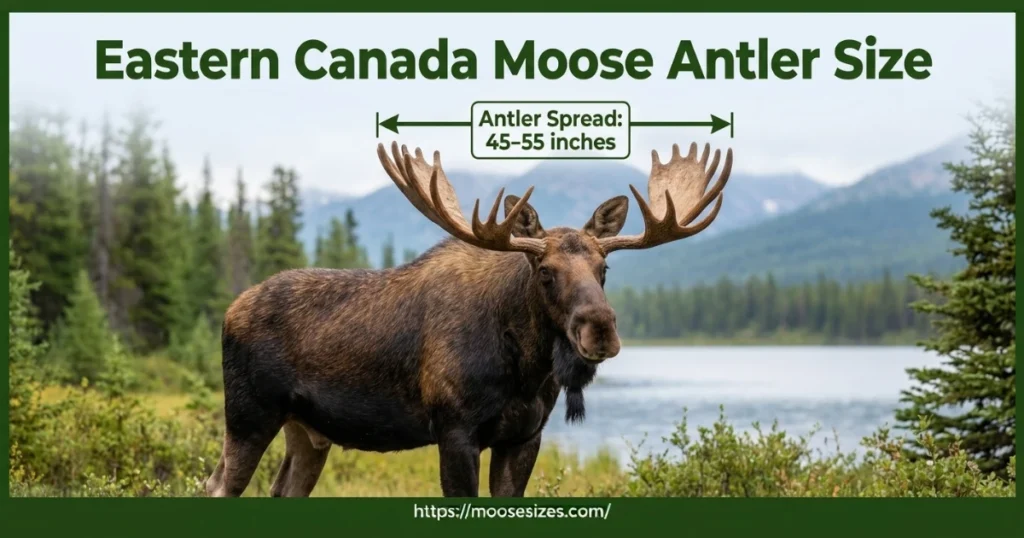
Eastern Canada moose antlers can spread more than 45 inches wide, though they run smaller than their western Canadian cousins. Antlers are the moose’s most recognizable feature — and one of nature’s fastest-growing bone structures.
Average Antler Spread and Width
A mature bull’s antlers typically spread 45 to 55 inches tip to tip. Compared to the western Canada moose, eastern bulls carry noticeably smaller and less massive headgear — a genetic difference tied to subspecies, not just diet or age.
Antler Shape and Palmation
Moose antlers grow palmate, meaning they flatten out like an open hand instead of branching into narrow points like a deer’s rack. Each antler splits into two parts: a smaller brow palm that grows forward, and a larger main palm that sweeps up and back, edged with sharp points called tines.
How Antler Size Changes With Age
Antlers grow largest between ages 5 and 10, then shrink again as the bull gets older. Bulls shed their antlers every winter after the rut and grow a brand-new set each spring — a process fueled almost entirely by calcium and protein from their diet.
More Posts: Western Canada Moose Size, Weight, Height, Length & Antlers
Eastern Canada Moose Brain Size
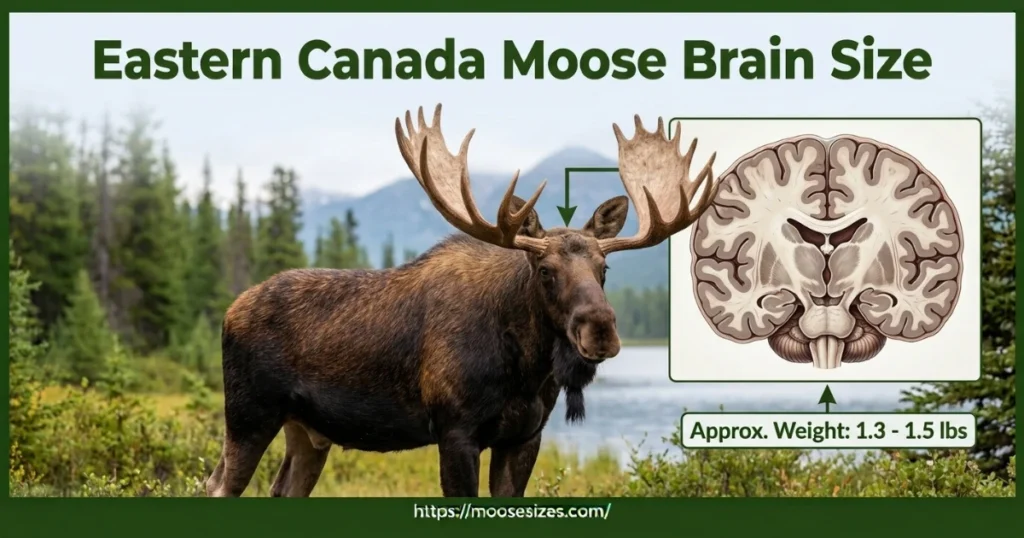
A moose’s brain weighs roughly 1.3 to 1.5 pounds — tiny compared to its half-ton body. This is a detail most guides skip, but it explains a lot about moose behavior.
How Brain Size Compares to Body Size
Relative to body mass, the moose has one of the smallest brain-to-body ratios among large land mammals in North America. A 1,000-pound moose carries a brain not much bigger than a large grapefruit.
Why Brain Size Matters for Senses and Behavior
A small brain doesn’t mean poor senses. Moose have excellent hearing and smell, but weak eyesight — they struggle to spot motionless objects even at close range. Their brain prioritizes processing scent and sound over vision, which is why moose often freeze rather than flee when startled; they’re relying on their nose and ears, not their eyes, to size up a threat.
More Posts: Bull Moose Size, Weight, Height, Length & Comparisons
What Affects Eastern Canada Moose Size?
Diet and Habitat
Moose are browsers, meaning they eat leaves, twigs, and bark rather than grazing on grass. A moose can eat 50 to 60 pounds of food a day in summer, feasting on willow, birch, aspen, and aquatic plants pulled straight from lake bottoms. Richer habitat means bigger, healthier animals.
Age and Genetics
Bulls hit peak body size and antler mass around 6 to 10 years old. Genetics set the ceiling — eastern Canada moose are simply a smaller subspecies than their western and Alaska-Yukon relatives, no matter how good the feeding grounds are.
Seasonal Weight Changes
Moose are heaviest in early fall, right before the rut, and lightest in late winter after months of surviving on woody browse and burning fat reserves just to stay warm.
Eastern Canada Moose Size Compared to Other Moose Subspecies
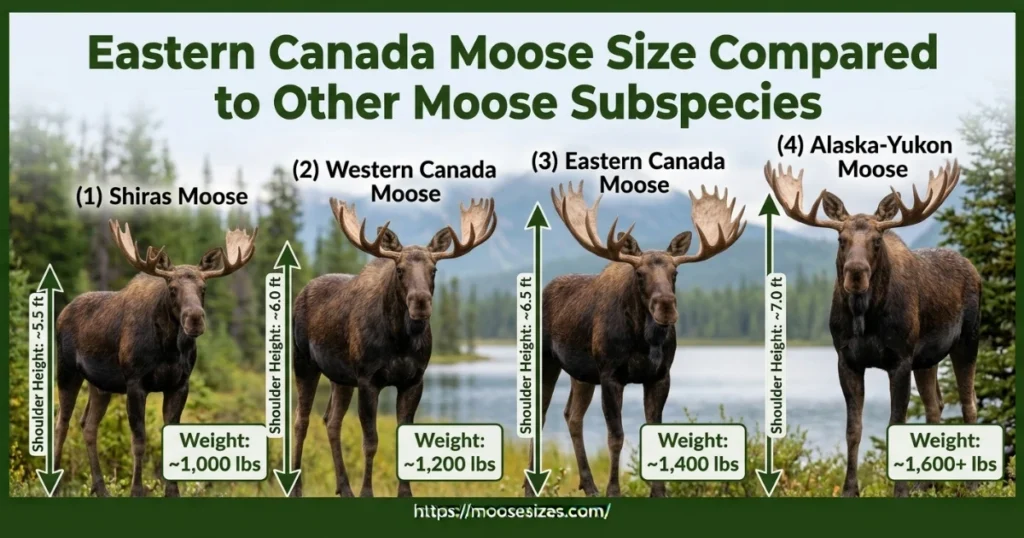
Eastern Canada moose rank in the middle of the pack — bigger than Shiras moose, but smaller than western Canada and Alaska-Yukon moose.
Eastern Canada Moose vs. Western Canada Moose
Western Canada moose are the heavier of the two, sometimes reaching 1,500 pounds, with larger, more massive antlers. Eastern moose also wear a darker, blackish-brown coat, compared to the rustier brown of western moose.
Eastern Canada Moose vs. Alaska-Yukon Moose
The Alaska-Yukon moose is the largest moose subspecies in the world, with bulls reaching 1,800 pounds and antler spreads up to 72 inches. Eastern Canada moose fall well short of that size in both body mass and antler spread.
Eastern Canada Moose vs. Shiras Moose
The Shiras moose, found in the Rocky Mountains, is the smallest of the North American subspecies, with bulls weighing 900 to 1,200 pounds and antlers reaching only about 50 inches. The eastern Canada moose is generally bulkier and carries a wider rack than the Shiras.
FAQ’s About Eastern Canada Moose Size
How much does an eastern Canada moose weigh?
An adult eastern Canada moose weighs between 600 and 1,400 pounds, with bulls at the heavier end of that range.
How tall is an eastern Canada moose?
Eastern Canada moose stand 6 to 7 feet tall at the shoulder hump, making them one of the tallest land animals in North America.
What is the antler spread of an eastern Canada moose?
Antler spread typically runs 45 to 55 inches wide, smaller than the western Canada and Alaska-Yukon subspecies.
How big is a moose’s brain?
A moose brain weighs about 1.3 to 1.5 pounds, a small fraction of its total body weight.
What is the biggest moose subspecies?
The Alaska-Yukon moose is the largest, with bulls weighing up to 1,800 pounds — well above the eastern Canada moose.

Hi, I’m Natalie Collins, the admin at MooseSizes.com. We simplify animal sizes, measurements, and wildlife comparisons with easy-to-follow guides, useful size charts, and accurate information to help you understand animal dimensions with confidence.