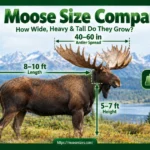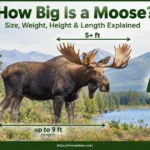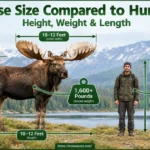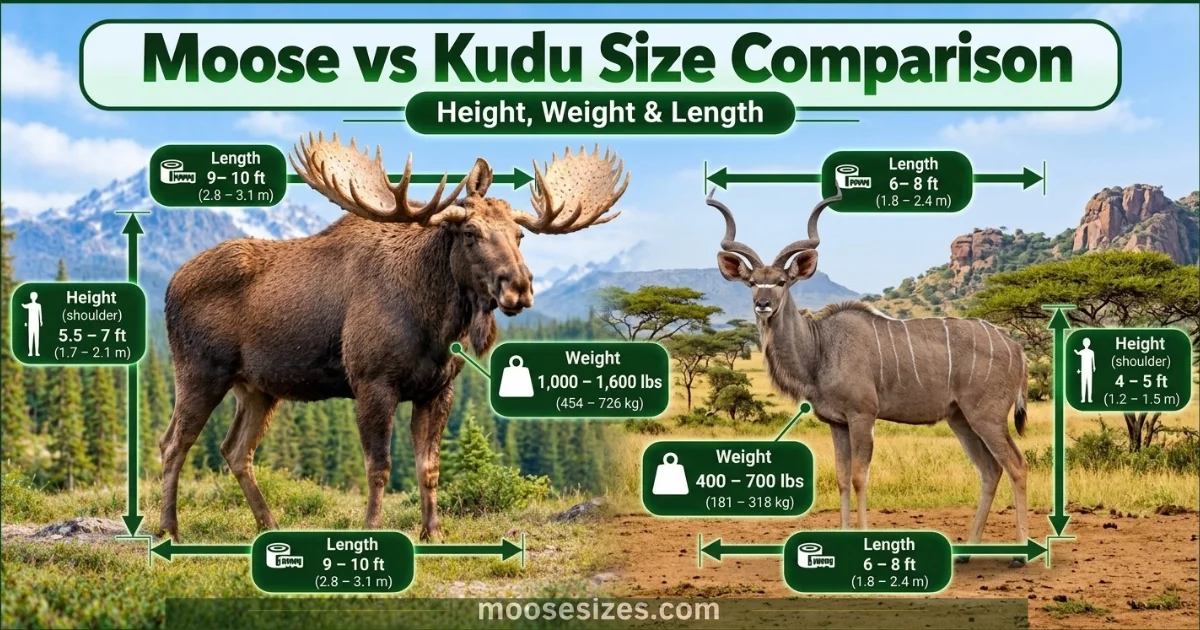
Bull moose can weigh up to 1,500 pounds, while a bull kudu reaches around 600–700 pounds. Moose stand about 6–7 feet tall at the shoulder, compared with roughly 4–5 feet for kudu.
A moose is bigger than a kudu in almost every way. Moose also stand taller at the shoulder and carry wider antlers than a kudu’s spiraled horns. Below, we break down the full moose vs kudu size comparison — weight, height, length, and headgear — with the numbers that matter most.
Moose vs Kudu Size Comparison at a Glance
| Measurement | Moose (Bull) | Kudu (Bull) |
|---|---|---|
| Weight | 840 – 1,500 lb | 420 – 600 lb (max 694 lb) |
| Shoulder height | 5.5 – 6.5 ft | 4.3 – 5.25 ft |
| Body length | 8 – 10 ft | 6 – 8 ft |
| Headgear | Antlers, up to 6 ft spread | Horns, up to 6 ft straight-line |
More Posts: Moose vs Bear Size
Moose Size, Weight and Height
Bull Moose Size
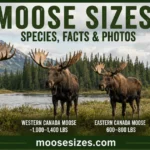
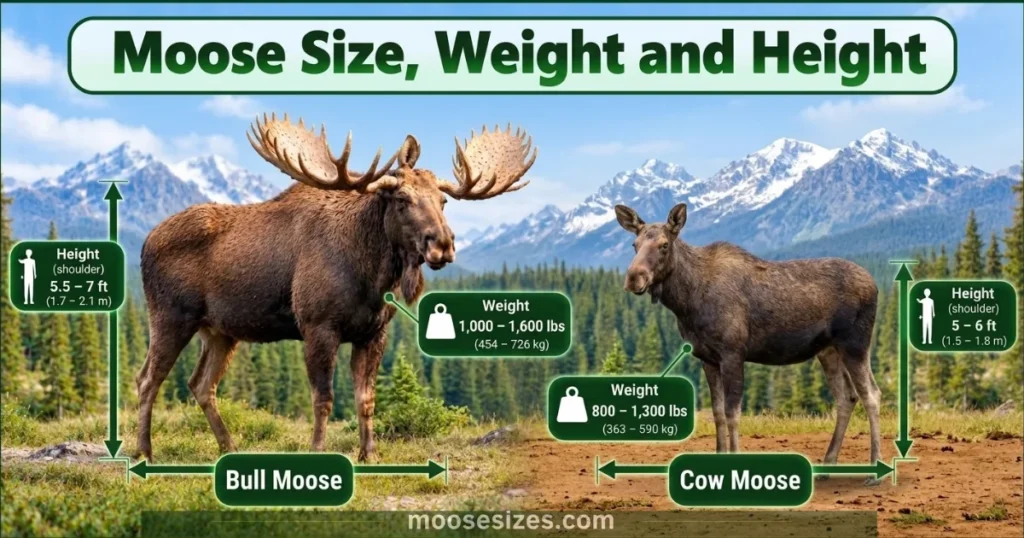
Adult bull moose typically weigh between 840 and 1,500 pounds. The Alaska-Yukon subspecies runs largest, with some bulls pushing past 1,600 pounds. At the shoulder, bulls stand 5.5 to 6.5 feet tall — taller than most adult humans at the withers alone. Body length runs 8 to 10 feet, nose to tail.
Cow Moose Size
Female moose are smaller but still massive compared to most North American game. Cows weigh 600 to 800 pounds and stand slightly shorter at the shoulder than bulls. Cows carry no antlers, which is the fastest way to tell the sexes apart at a distance.
More Posts: Moose vs Irish Elk Size
Kudu Size, Weight and Height
Bull Kudu Size
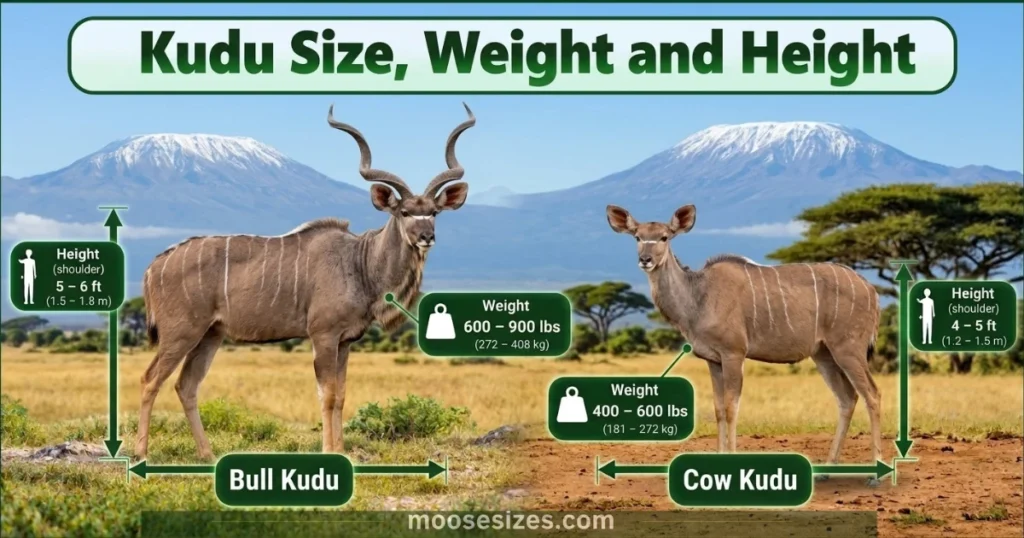
Bull kudu weigh 190 to 270 kilograms (420 to 600 pounds) on average, with a documented maximum of 315 kilograms (694 pounds). Shoulder height reaches 130 to 160 centimeters (51 to 63 inches). Despite the impressive horns, a bull kudu’s body is narrow and lean — it looks bigger than it weighs.
Cow Kudu Size
Female kudu are noticeably smaller, weighing 120 to 210 kilograms (260 to 460 pounds) and standing as low as 100 centimeters (39 inches) at the shoulder. Cows have no horns and a lighter, more slender frame overall.
Moose Antlers vs Kudu Horns Size
Moose Antler Size and Spread
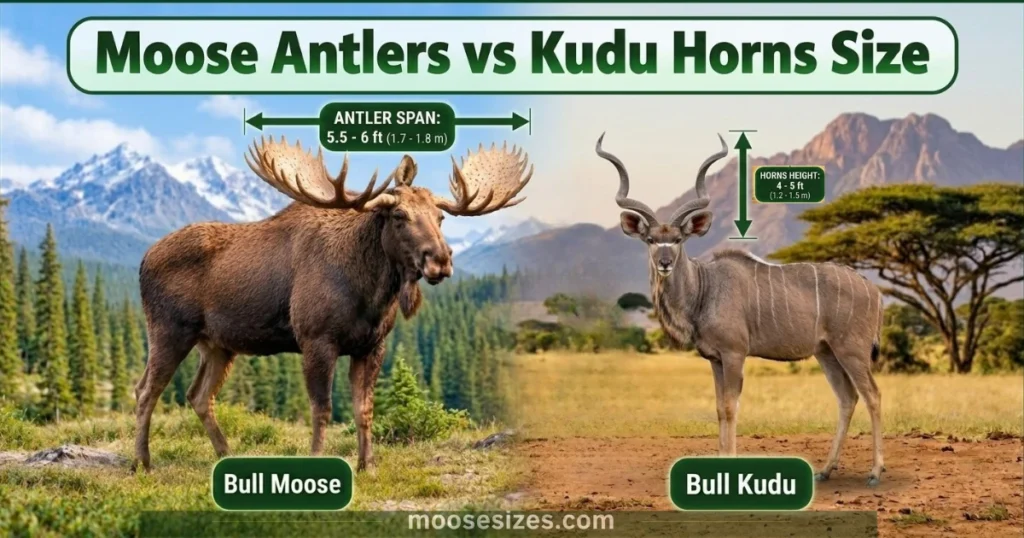
Bull moose grow palmate antlers — flat, paddle-shaped, with points along the edges. A mature bull’s antler spread can reach 5 to 6 feet tip to tip. Moose shed their antlers every year after the fall rut and regrow a new set each spring, often larger than the year before.
Kudu Horn Length and Spiral
Bull kudu grow spiraled horns, twisting two and a half times as they grow. Straightened out, an average set measures 120 centimeters (47 inches), with record horns reaching 187.64 centimeters (73.87 inches) — the longest horns of any antelope species. Unlike a moose’s antlers, kudu horns are permanent and grow throughout the animal’s life.
More Posts: Moose vs Caribou Size
Moose Size Compared to Other Animals
Moose vs Elk Size
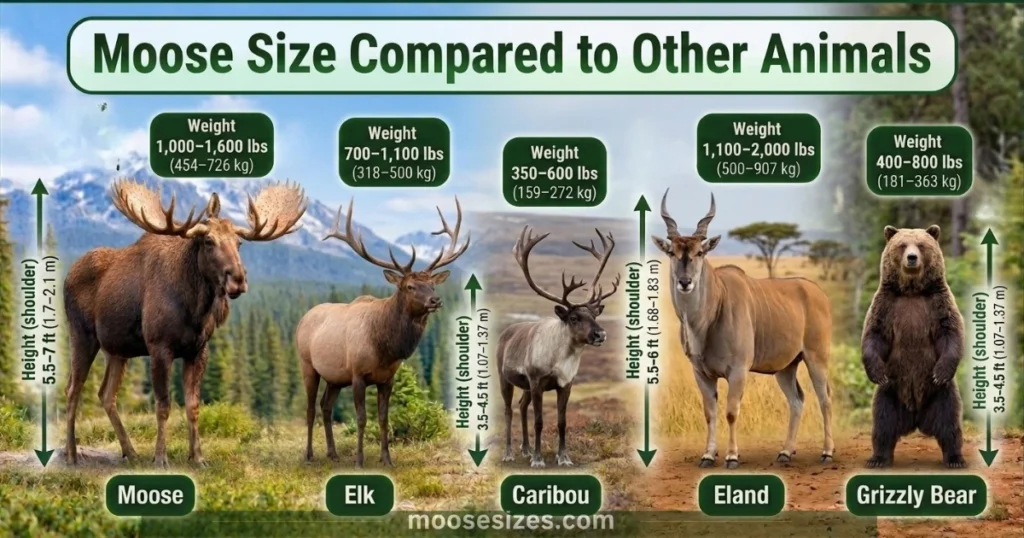
Moose are significantly larger than elk. A bull elk typically weighs 700 to 1,100 pounds, well under a bull moose’s top weight. Antlers also differ — elk grow branching, pointed antlers, while moose grow the flat, paddle-shaped kind.
Moose vs Caribou Size
Caribou are much smaller. Bull caribou weigh 350 to 400 pounds on average, less than a third of a large bull moose. Caribou are the only deer species where both sexes commonly grow antlers, unlike moose.
Moose vs Eland Size
The eland is Africa’s largest antelope and can actually rival a moose in weight. Giant eland bulls weigh 970 to 2,094 pounds, meaning the heaviest eland can outweigh even a large moose. Body shape is the main difference — eland are stockier and shorter at the shoulder.
Moose vs Grizzly Bear Size
A large bull moose can outweigh a grizzly bear. Grizzlies typically weigh 400 to 800 pounds, though coastal bears can exceed 1,000 pounds. In direct weight terms, a mature bull moose usually wins.
FAQ’s About Moose vs Kudu Size
Is a moose bigger than a kudu?
Yes. A bull moose can weigh up to 1,500 pounds, roughly two to three times heavier than a bull kudu’s max weight of 694 pounds.
How tall is a kudu compared to a moose?
A moose stands 5.5 to 6.5 feet at the shoulder, while a kudu tops out around 5.25 feet — moose are noticeably taller.
Which is heavier, a moose or a kudu?
The moose is heavier by a wide margin, with bulls averaging 840 to 1,500 pounds versus a kudu bull’s 420 to 600 pounds.
Do moose and kudu live in the same habitat?
No. Moose live in cold northern forests across North America, Europe, and Asia, while kudu live in African bushland and woodland savanna.

Hi, I’m Natalie Collins, the admin at MooseSizes.com. We simplify animal sizes, measurements, and wildlife comparisons with easy-to-follow guides, useful size charts, and accurate information to help you understand animal dimensions with confidence.