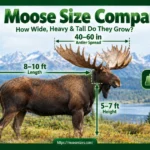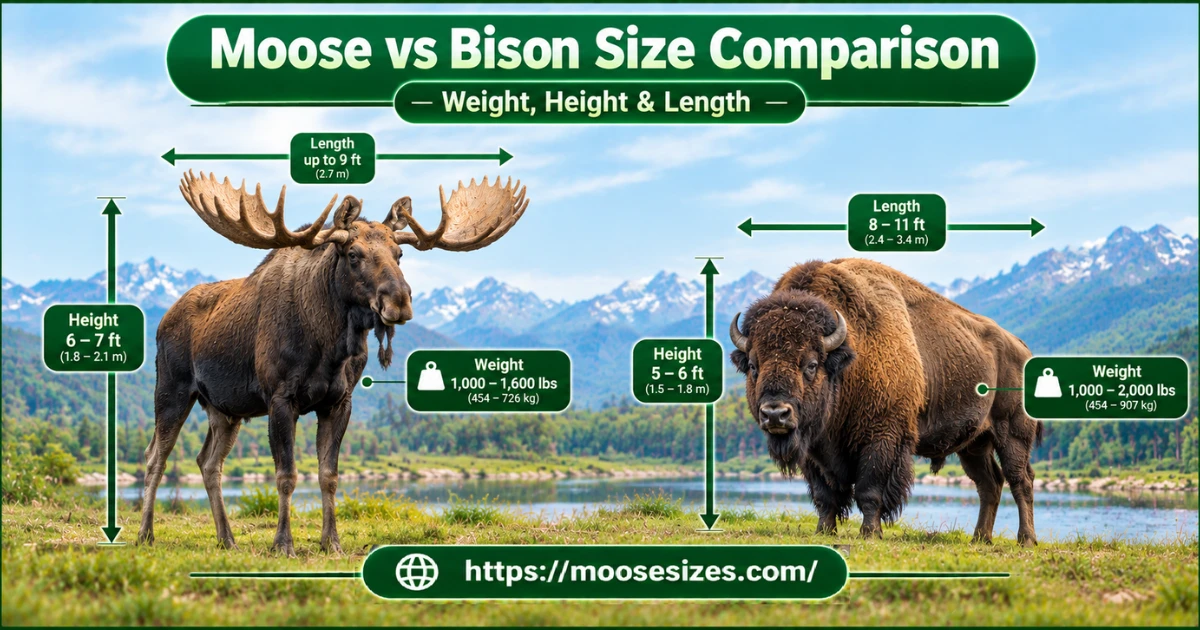
A bull moose weighs 600–1,500 pounds and stands 6–7 feet tall, while a bison weighs 1,800–2,200+ pounds and reaches 5–6.5 feet at the shoulder.
A bull bison can top 2,000 pounds, while a bull moose can stand taller at the shoulder. Neither animal is “bigger” in every sense — it depends on which measurement you care about. Bison win on weight. Moose win on height. That’s the short answer to moose vs bison size.
Moose vs Bison Size Comparison Chart
| Trait | Moose | Bison |
|---|---|---|
| Weight (bull) | 600–1,500 lbs | 1,800–2,200+ lbs |
| Shoulder height | 6–7 ft | 5–6.5 ft |
| Body length | 8–10 ft | 7–9 ft |
| Family | Deer (Cervidae) | Cattle (Bovidae) |
Moose Size — Weight, Height & Length
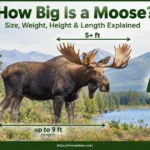
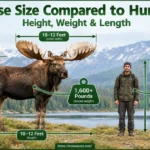
An adult bull moose weighs between 600 and 1,500 pounds, depending on age and subspecies. The largest moose, the Alaska-Yukon moose, can push past 1,600 pounds. At the shoulder, bull moose stand 6 to 7 feet tall — that’s taller than most doorframes. Nose to tail, a moose runs 8 to 10 feet long.
Bison Size — Weight, Height & Length
A bull bison is heavier, typically weighing 1,800 to 2,200 pounds, with some bulls reaching 2,800 pounds or more. Despite that mass, bison are shorter at the shoulder — usually 5 to 6.5 feet — because their legs are stockier and shorter than a moose’s. Body length runs 7 to 9 feet, not counting the tail.
More Posts: Moose vs Elephant Size, Weight, Height, Length
Which Is Bigger — Moose or Bison?
Bison Are Heavier by Weight
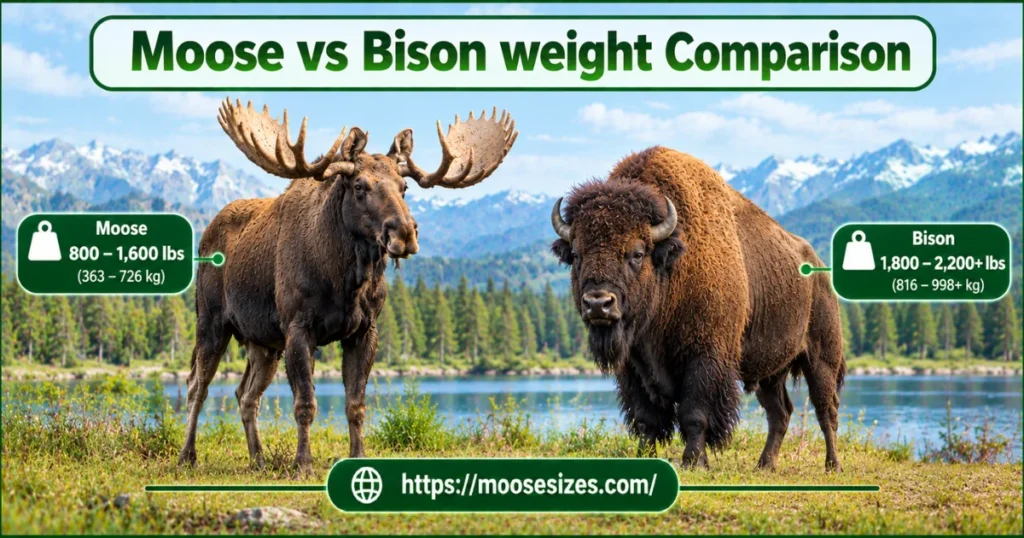
By raw mass, the bison wins. An average bull bison outweighs an average bull moose by several hundred pounds. This is why bison are often called the heaviest land animal in North America. Their dense muscle, thick bone structure, and massive front-loaded build add pounds that a leaner moose simply doesn’t carry.
Moose Are Taller at the Shoulder
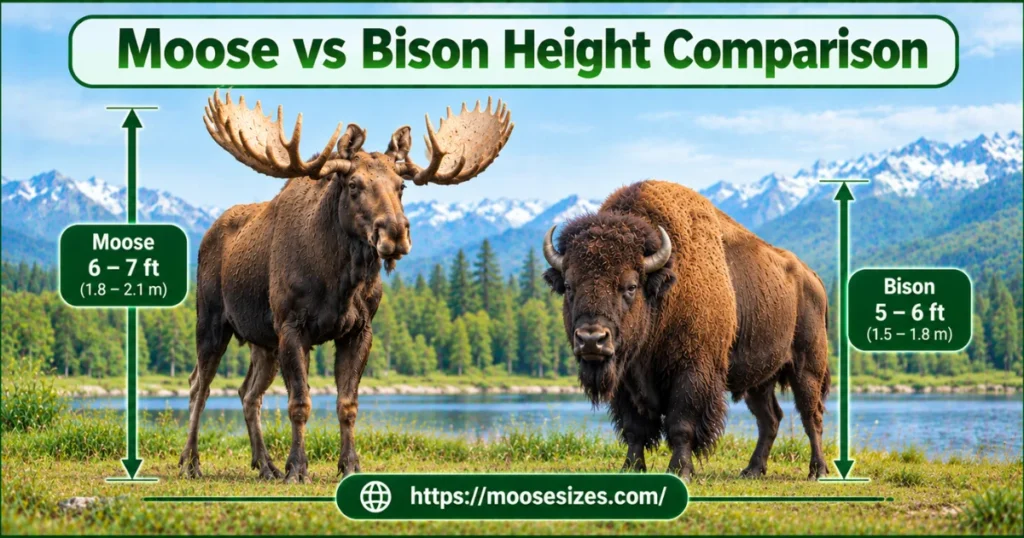
Stand a moose and a bison side by side, and the moose looks taller. Long, stilt-like legs push the moose’s shoulder line higher off the ground than a bison’s. Add the head and antlers, and a bull moose can tower well over 9 feet from hoof to antler tip — taller than almost any other land mammal in North America.
More Posts: Moose Size vs Giant Eland Size, Weight, Height & Length
Why They Look Different at the Same Size
The Bison’s Hump vs the Moose’s Sloped Back
A bison’s most recognizable feature is its shoulder hump, formed by long spinal bones called vertebral processes that support heavy neck and head muscles. This hump makes bison look front-heavy and low-slung.
Moose have no true hump — their back slopes gently downward from a tall shoulder to a shorter hindquarter, giving them a rangier, leggier silhouette.
Leg Length and Body Proportions
Moose legs are long and thin, built for wading through deep snow and swamps. Bison legs are short and thick, built for sprinting and pushing through snow by plowing with their heads instead of stepping over it.
This single difference in leg design is the biggest reason the two animals carry their similar weight so differently.
Moose Size Compared to Other Animals
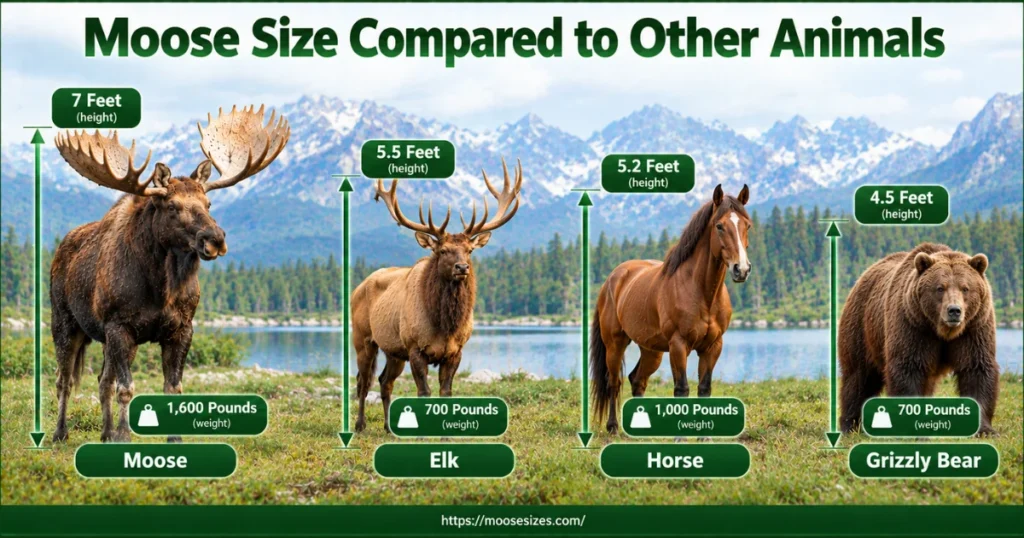
Moose vs Elk Size
A bull moose dwarfs a bull elk. Elk typically weigh 500 to 700 pounds, roughly half the weight of a large moose. Moose also stand taller at the shoulder and carry wider, flatter antlers than an elk’s pointed rack.
Moose vs Horse Size
Most riding horses weigh 900 to 1,200 pounds — lighter than an average bull moose. A moose is also generally taller at the shoulder than most horse breeds, which is part of why an unexpected moose encounter feels so massive up close.
Moose vs Grizzly Bear Size
A large male grizzly bear can weigh 500 to 800 pounds, well under a bull moose’s typical weight. However, a grizzly standing on its hind legs can briefly reach a similar height to a moose’s shoulder line, which is why size alone isn’t a reliable way to judge threat level in the wild.
More Posts: Moose Size Compared to Humans Height, Weight & Length
FAQ’s About Moose vs Bison Size
Is a bison bigger than a moose in weight?
Yes. Bison are heavier, with bulls commonly weighing 1,800 to 2,200 pounds versus a moose’s typical 600 to 1,500 pounds.
Can a moose be taller than a bison?
Yes. Moose have longer legs, so they usually stand taller at the shoulder than bison, even though bison weigh more.
What is the largest land mammal in North America by size?
It’s a split title: the bison is the heaviest, and the moose is the tallest, so “largest” depends on which measurement you mean.
How much taller is a moose than a bison?
A bull moose usually stands 6 inches to 1.5 feet taller at the shoulder than a bull bison, thanks to its longer legs.
Are bison stronger than moose because of their size?
Weight adds power, so bison generally have more raw pushing force. But moose compensate with long-legged kicks and antler leverage in a fight.

Hi, I’m Natalie Collins, the admin at MooseSizes.com. We simplify animal sizes, measurements, and wildlife comparisons with easy-to-follow guides, useful size charts, and accurate information to help you understand animal dimensions with confidence.