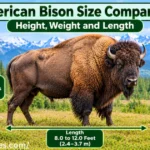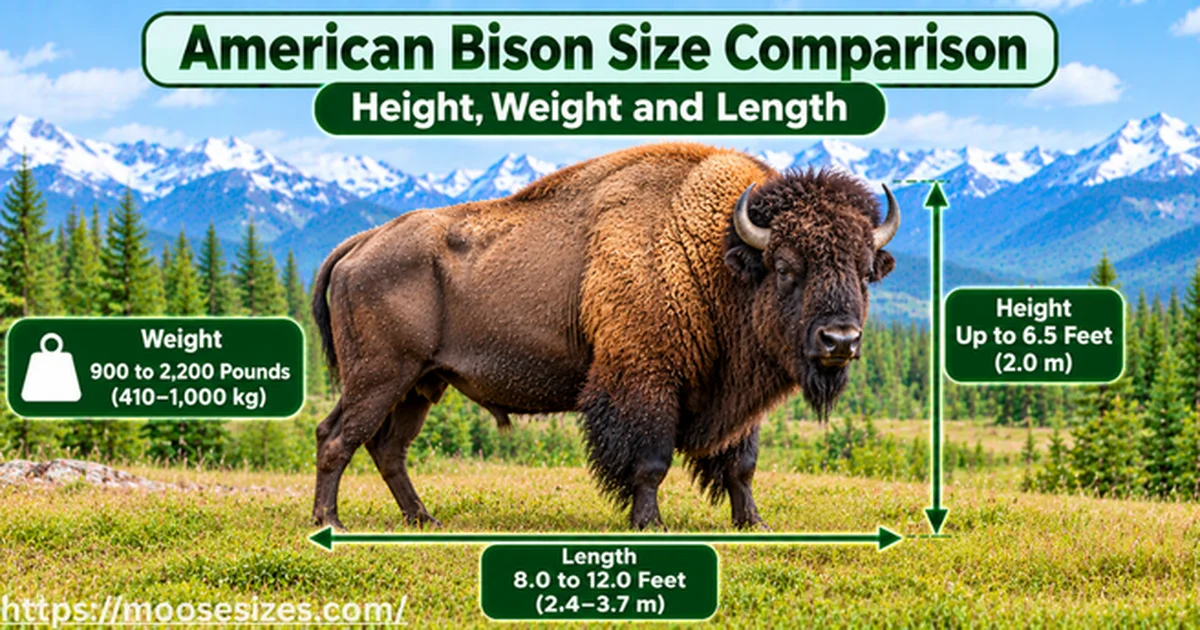
An adult bull stands about 6 feet tall at the shoulder. It weighs up to 2,000 pounds and measures 10 to 12 feet long. That makes the American bison the heaviest land animal in North America.
This bison size comparison shows how bulls, cows, calves, and other animals stack up. You’ll also see why size matters when you visit a U.S. park.
Bison Size Comparison at a Glance
How Big Is an American Bison?
An adult bison is built like a tank. Most of its weight sits up front, in the head, neck, and shoulder hump. The hump is muscle, not fat. It powers the head as the bison pushes snow aside.
The tallest point is the top of the hump. On a big bull, it sits close to the height of a grown man’s head.
Bull vs Cow Bison Size
Bull bison are far bigger than cows. A bull often weighs twice as much as a cow. Its neck, chest, and horn bases are also thicker.
Cows are lighter and slimmer. They still look huge next to a cow from a farm.
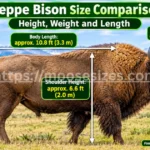
More Post: Steppe Bison Size
Bison Size Chart
| Measure | Bull | Cow |
|---|---|---|
| Weight | 1,000–2,000 lb (450–900 kg) | 700–1,000 lb (320–450 kg) |
| Shoulder height | 5–6 ft (1.5–1.8 m) | 4–5 ft (1.2–1.5 m) |
| Body length | 10–12 ft (3–3.6 m) | 7–10 ft (2.1–3 m) |
American Bison vs European Bison Size
Plains Bison vs Wood Bison Size
North America has two subspecies. Wood bison are usually the bigger of the two. They also have a squarer hump. Plains bison are a bit smaller and have a rounder hump.
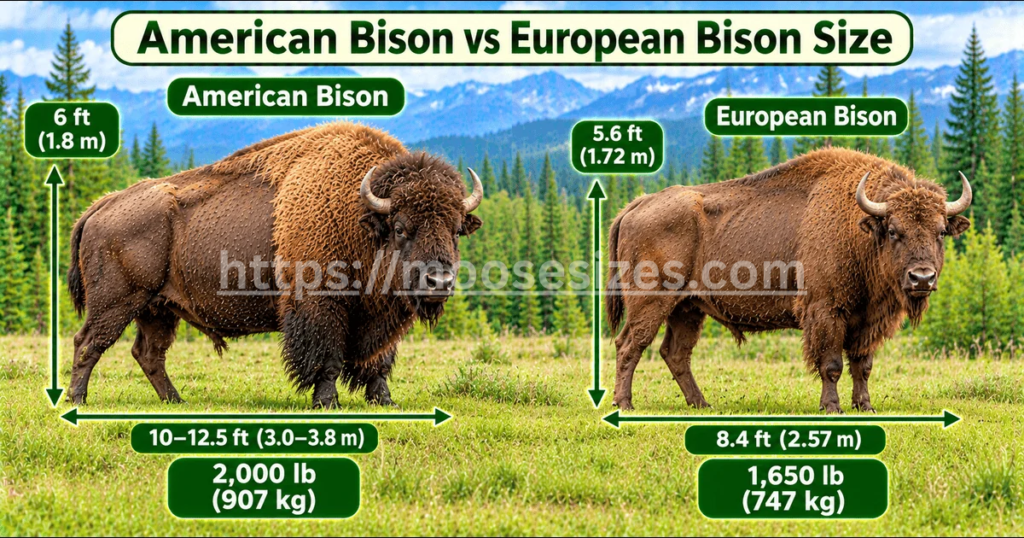
American vs European Bison: Height and Weight
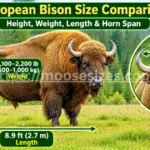
The European bison, or wisent, is taller but lighter. It stands up to about 6 feet 9 inches and weighs roughly 935 to 2,030 pounds. Its legs are longer.
The American bison is heavier and has a bulkier front end. It also carries more hair on the head, neck, and shoulders.
Ice Age Bison Size Comparison
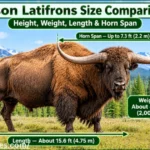
Today’s bison are small next to their ancestors. Bison latifrons, an Ice Age bison, had horns that spread over 6 feet. Scientists estimate it was much heavier than a modern bull.
Bison antiquus was closer to today’s size. It is the direct ancestor of the plains bison.
More Post: Bison Latifrons Size
Bison Size Comparison to Other Animals
Bison vs Moose Size
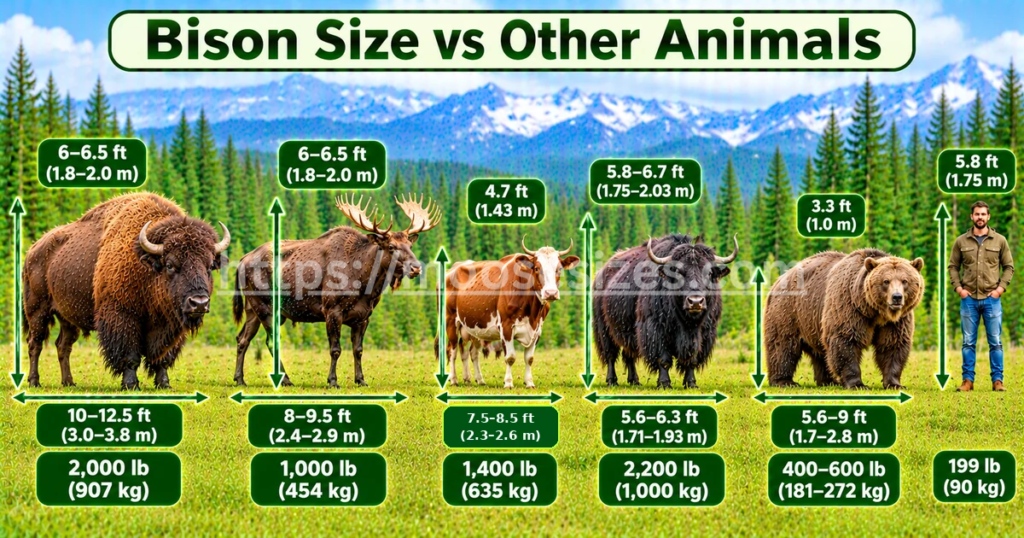
Is a bison bigger than a moose? It depends on what you measure. A moose is taller. Bulls stand 6 to 7 feet at the shoulder. A bison is stockier and often heavier.
A big bull moose can weigh up to about 1,600 pounds. A large bull bison can top 2,000. Moose also carry antlers that can span up to 6 feet, and bison do not.
Bison vs Cow Size
A bison is much larger than a farm cow. Bulls can weigh up to twice as much as a typical beef cow. The body shape differs too. A cow’s weight sits in the middle, but a bison’s weight sits up front, with a high hump.
Bison vs Yak Size
Bison win on weight and length. A bull yak usually weighs 700 to 1,200 pounds. A yak can stand a little taller, though. Yaks are built for high mountain air, while bison are built for open plains.
Bison vs Grizzly Bear Size
Most male grizzly bears weigh well under 1,000 pounds. A big bull bison can weigh two or more times that. Still, grizzlies and wolves do hunt bison, mostly calves, sick animals, and the old.
Bison Size Compared to a Human
An average man stands about 5 feet 9 inches tall. A bull bison matches that at the shoulder, and the hump rises higher. A 2,000-pound bull weighs about as much as ten grown men. It also weighs about as much as a small car.
Bison vs Buffalo Size
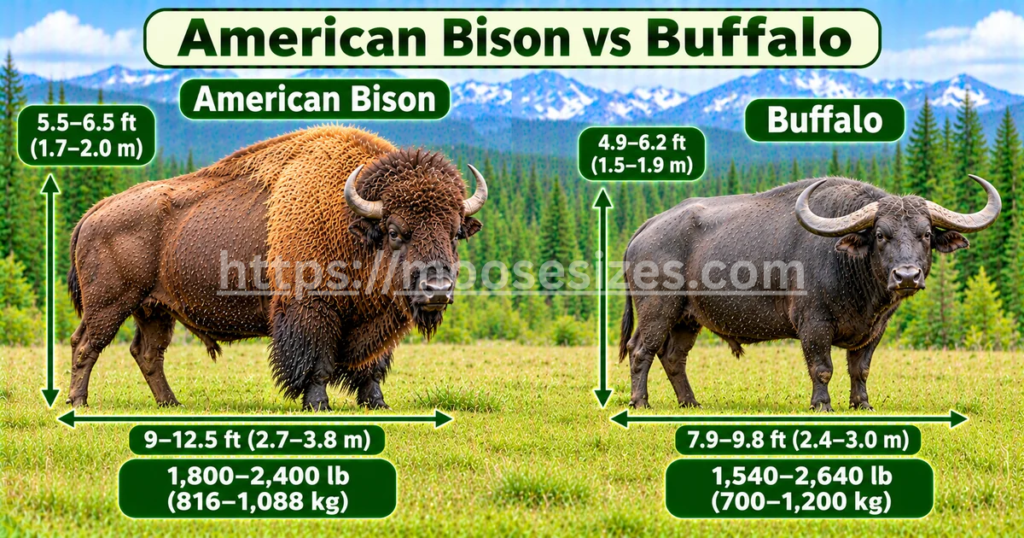
Bison vs Water Buffalo Size
Is a bison the same as a buffalo? No. Water buffalo live in Asia. Large wild bulls can weigh about as much as the biggest bison, and some are heavier. They have long, swept-back horns and no hump.
Bison vs African Cape Buffalo Size
The Cape buffalo lives in Africa. A bull weighs roughly 1,200 to 1,900 pounds. It has heavy, curved horns that join across the forehead. Bison bulls are taller at the hump and often heavier.
Why Americans Call Bison “Buffalo”
Early European explorers used “buffalo” for the shaggy animals they saw on the plains. The name stuck. Today, bison is the proper name. It is also the national mammal of the United States.
More Post: American Bison Size
Bison Size and Safety: Speed, Calves and Distance
How Fast Is a Bison for Its Size?
How fast can a bison run? A bison can run about 35 miles per hour. That is faster than any person. The National Park Service warns that bison look calm but can charge fast.
Baby Bison Size and Growth
A newborn bison calf weighs about 30 to 70 pounds. Calves are born reddish-orange, which earns them the nickname “red dogs.” They turn dark brown at around two months old. A calf stays with its mother for two to three years.
Safe Distance From Bison in U.S. National Parks
How close can you get to a bison? Stay at least 25 yards (about 75 feet) away. Keep farther back from cows with calves. Bulls are most dangerous in the rut, from July to September. Use a zoom lens and never walk between animals.
More Post: Mule Deer Size
FAQ’s About Bison Size Comparison
How much does a full-grown bison weigh?
A bull bison weighs about 1,000 to 2,000 pounds. A cow weighs about 700 to 1,000 pounds.
Is a bison bigger than a cow?
Yes. A bison can weigh up to twice as much as a typical cow. It also stands taller and has a hump.
What is the largest bison ever recorded?
The heaviest wild bison on record weighed about 2,800 pounds. A ranch-raised bull has been reported at 3,801 pounds.
Are bison the largest land animals in North America?
Yes, by weight. Moose can stand taller, but bison are heavier overall.
How tall is a bison compared to a human?
A bull bison is about as tall as an adult man at the shoulder. Its hump rises higher.
Which is bigger, a bison or a buffalo?
It depends on the species. Water buffalo can match large bison, and Cape buffalo are usually a bit lighter.

Hi, I’m Natalie Collins, the admin at MooseSizes.com. We simplify animal sizes, measurements, and wildlife comparisons with easy-to-follow guides, useful size charts, and accurate information to help you understand animal dimensions with confidence.