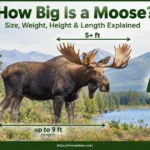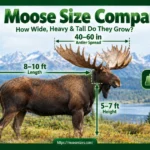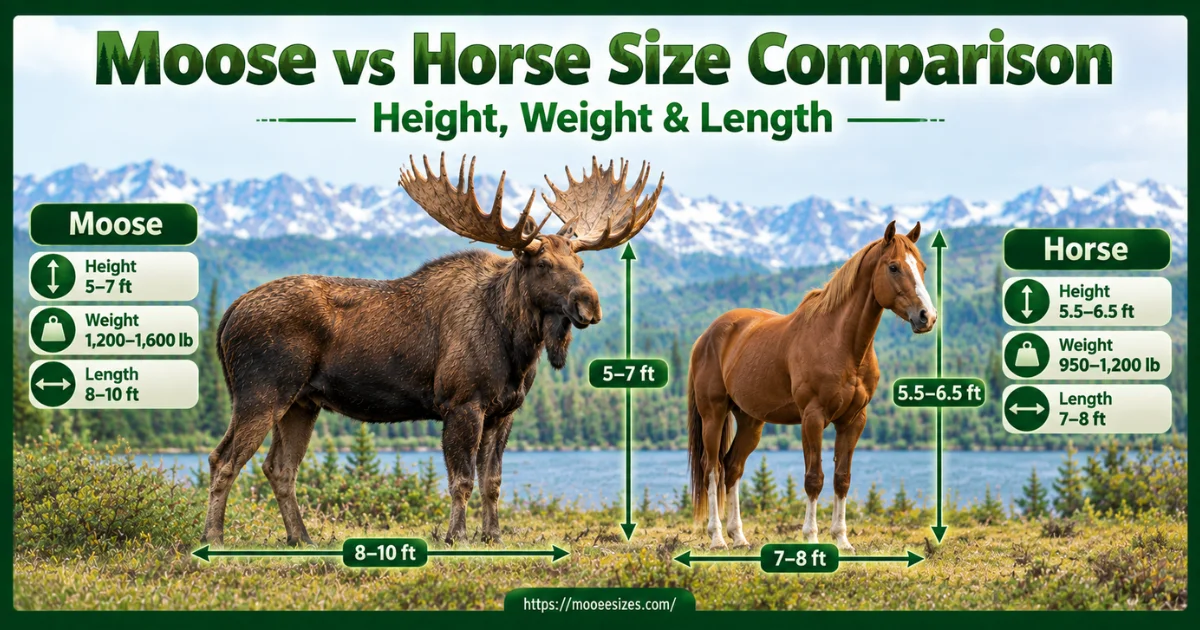
A moose stands 4.6 to 6.9 feet tall and weighs 600 to 1,600 pounds, while a horse averages 5 to 6 feet tall and 600 to 2,200 pounds.
A moose is bigger than a horse in most cases. Moose stand taller at the shoulder and outweigh the average horse. But some giant horse breeds, like the Shire, can match or beat a moose in weight. Let’s break down the real moose vs horse size numbers.
Moose vs Horse Size Comparison Chart
| Trait | Moose | Horse |
|---|---|---|
| Weight | 600 – 1,600 lbs | 600 – 2,200 lbs |
| Shoulder height | 4.6 – 6.9 ft | 5 – 6 ft (avg) |
| Body length | 7 – 10 ft | 6 – 8 ft |
| Top speed | 35 mph | 30 – 55 mph |
| Antlers | Yes (males) | No |
Moose vs Horse Weight
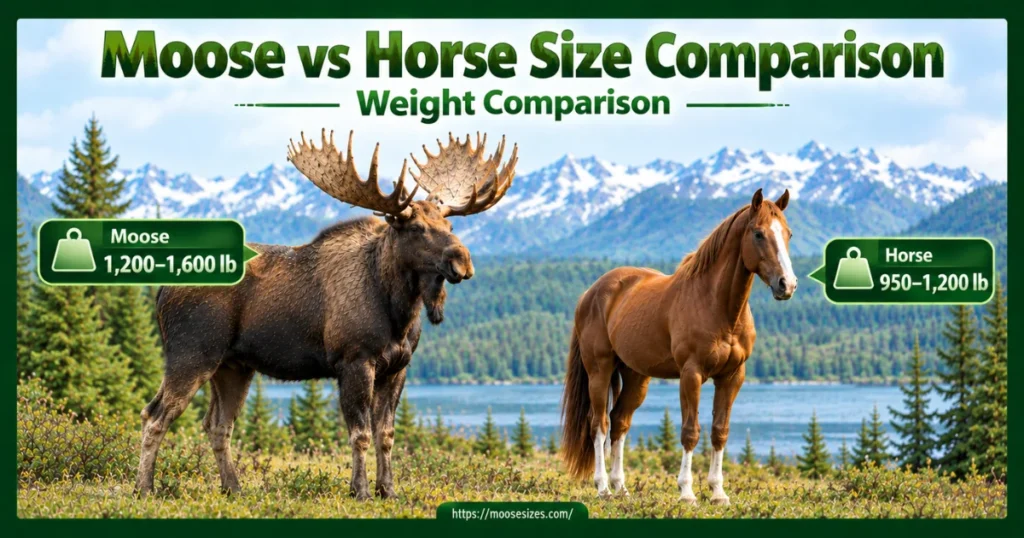
An average moose weighs between 600 and 1,600 pounds. Bull moose in Alaska tend to be the heaviest of all moose subspecies.
Horses vary a lot by breed. A riding horse may weigh 900 to 1,200 pounds. But draft breeds like the Shire or Belgian can top 2,000 pounds, making them heavier than most moose.
More Posts: Moose Size Compared to Humans
Moose vs Horse Height at the Shoulder
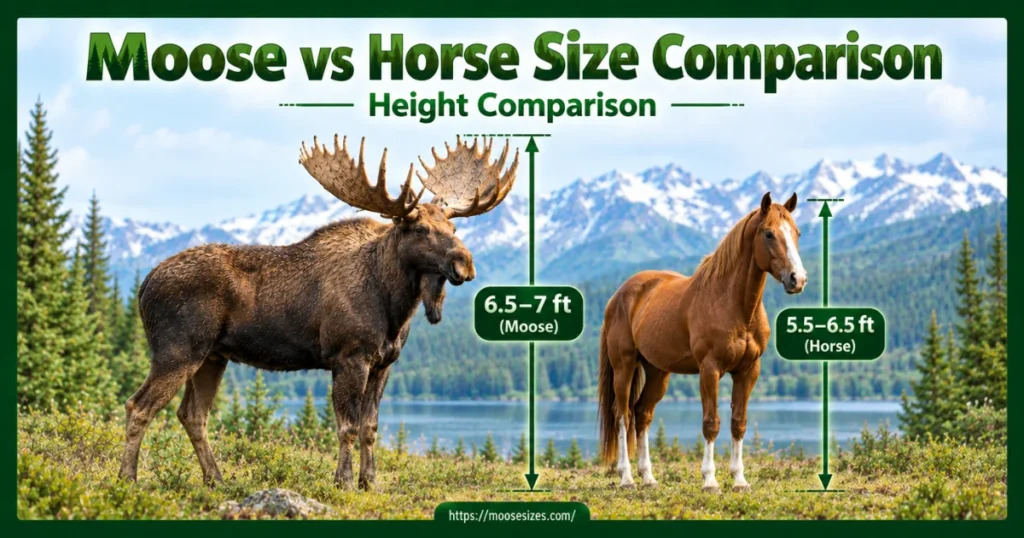
Moose height ranges from about 4.6 feet to nearly 7 feet at the shoulder. This makes moose one of the tallest land animals in North America.
Most horses stand between 5 and 6 feet tall at the shoulder. The tallest horse ever recorded, a Belgian gelding named Big Jake, measured just under 7 feet — almost matching a large bull moose.
Moose vs Horse Body Length
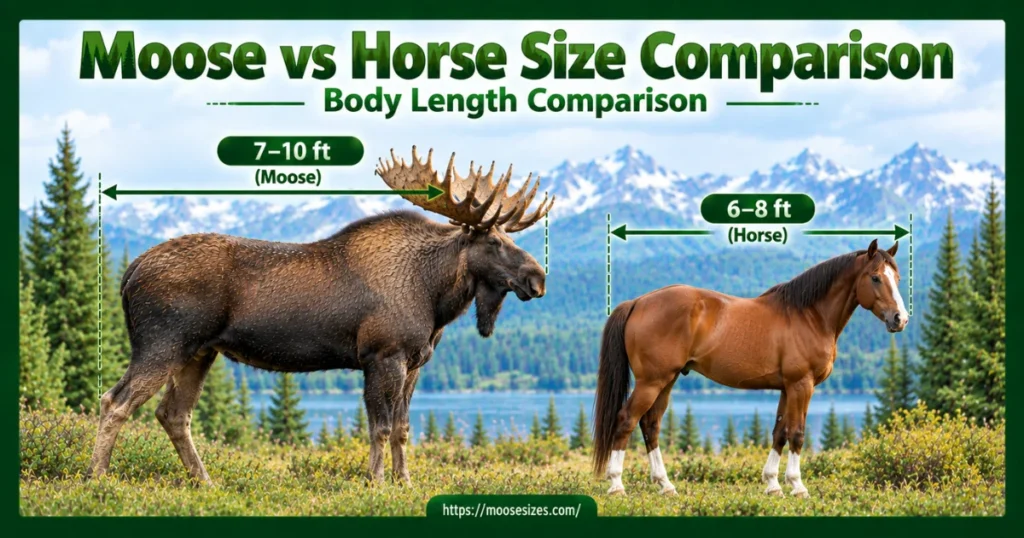
Moose typically measure 7 to 10 feet from nose to tail. Their long legs and stretched-out frame give them a lanky, tall build.
Horses run shorter, usually 6 to 8 feet long. Their body shape is more compact and muscular, built for speed rather than height.
More Posts: Bull Moose Size, Weight, Height, Length & Comparisons
Moose vs Horse Size
Antlers and How They Add to Moose Size
Male moose grow antlers that can span up to 6 feet across. These antlers add serious visual bulk and can weigh over 40 pounds on their own.
Horses have no antlers or horns at all. This is one of the fastest ways to tell the two animals apart at a glance.
Coat, Fur, and Body Build Differences
A moose has a two-layer coat. The outer layer is made of hollow guard hairs, and the inner layer is a dense, insulating undercoat. This helps moose survive brutal winters in places like Maine and Alaska.
Horses have a single-layer coat that thickens slightly in winter. Their build is leaner and more streamlined, made for running rather than heat retention.
Hooves and Leg Structure
Moose have cloven hooves, meaning each foot splits into two toes. This spreads their weight and gives them better grip on snow and mud.
Horses have a single, solid hoof on each foot. This hoof shape allows for powerful, efficient strides at high speed.
More Posts: Shiras Moose Size, Weight, Height, Antlers & How It Compares to Other Moose
Moose vs Horse Power
Moose Speed vs Horse Speed
A horse is faster than a moose. Horses can reach 30 to 55 miles per hour depending on the breed, while moose max out around 35 miles per hour.
That said, a moose can hold that speed through deep snow and rough terrain, something most horses cannot do.
Moose Power vs Horse Power
A moose relies on raw body mass and its antlers during confrontations. Their kicks are also extremely powerful and can be deadly to predators like wolves.
A horse’s strength comes from its legs. A well-placed kick from a horse can break bone, and their pulling power is why they were used for farm work for centuries.
Domestication and Why Size Alone Isn’t Everything
Horses have been domesticated for thousands of years. This long history with humans is why horses are used for riding, farming, and sport across the United States.
Moose are wild animals. A few have been tamed in rare cases, but moose are not bred or raised for human use the way horses are.
More Posts: Western Canada Moose Size, Weight, Height, Length & Antlers
Moose Size Compared to Other Animals
Moose vs Elk Size
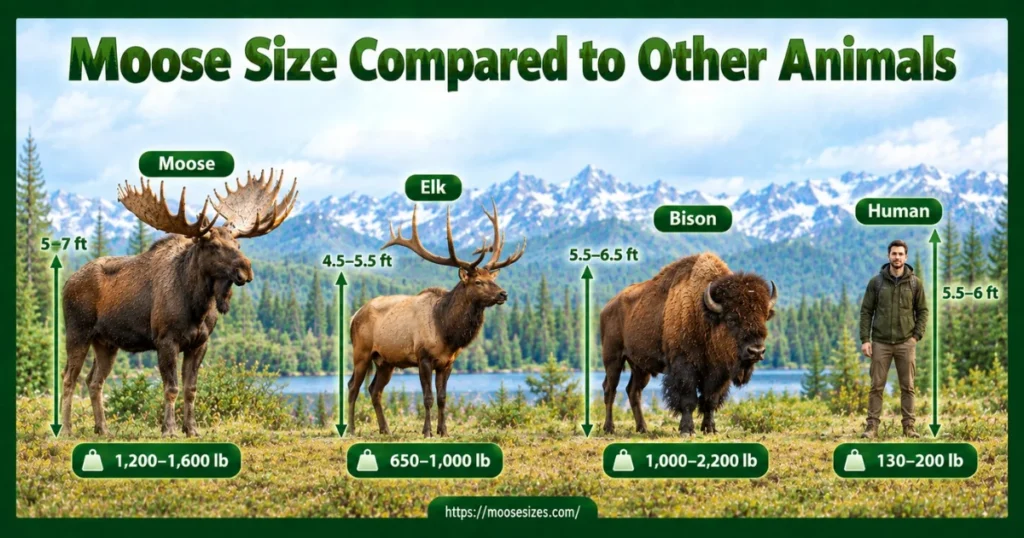
Elk are smaller than moose. An elk usually weighs 500 to 700 pounds and stands around 5 feet at the shoulder, well below a moose’s average size.
Moose vs Bison Size
Bison can outweigh moose, with bulls reaching up to 2,000 pounds. However, moose are usually taller at the shoulder than bison.
Moose vs Human Size
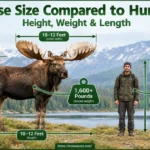
An average adult man stands under 6 feet tall. A full-grown bull moose towers over most people, often standing a foot or more taller at the shoulder alone, before counting its head and antlers.
Moose vs Horse Size in the Wild
Where Moose and Horses Are Found in the U.S.
Moose live in northern states like Maine, Minnesota, Alaska, and parts of the Rocky Mountains. They prefer forests, wetlands, and cold climates.
Horses are found across the entire country, mostly on farms, ranches, and stables rather than in the wild.
What to Do If You Encounter a Moose
Keep a distance of at least 25 to 50 yards from any moose. Moose can charge without warning, especially cows with calves or bulls during the fall rut.
Never approach a moose, even if it looks calm. Its size and speed make it far more dangerous than it appears.
FAQ’s About Moose vs Horse Size
Is a moose bigger than a horse?
Yes, in most cases. Moose are usually taller and heavier than the average horse, though some large draft horse breeds can outweigh a moose.
Can a moose kill a horse?
Yes, a moose can seriously injure or kill a horse if it feels threatened. Moose use their size, sharp hooves, and body weight to defend themselves.
What is the biggest horse breed compared to a moose?
The Shire horse is the largest horse breed and can weigh over 2,000 pounds, making it heavier than most moose despite being shorter at the shoulder.
How much taller is a moose than a horse?
A moose can stand up to a foot taller than the average horse at the shoulder. Only the tallest horse breeds come close to matching moose height.
Do moose and horses ever live in the same area?
Rarely. Moose stick to wild forests and wetlands, while horses are mostly kept on farms and ranches, so direct contact between the two is uncommon.

Hi, I’m Natalie Collins, the admin at MooseSizes.com. We simplify animal sizes, measurements, and wildlife comparisons with easy-to-follow guides, useful size charts, and accurate information to help you understand animal dimensions with confidence.