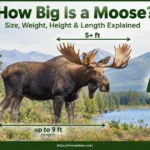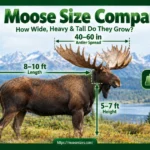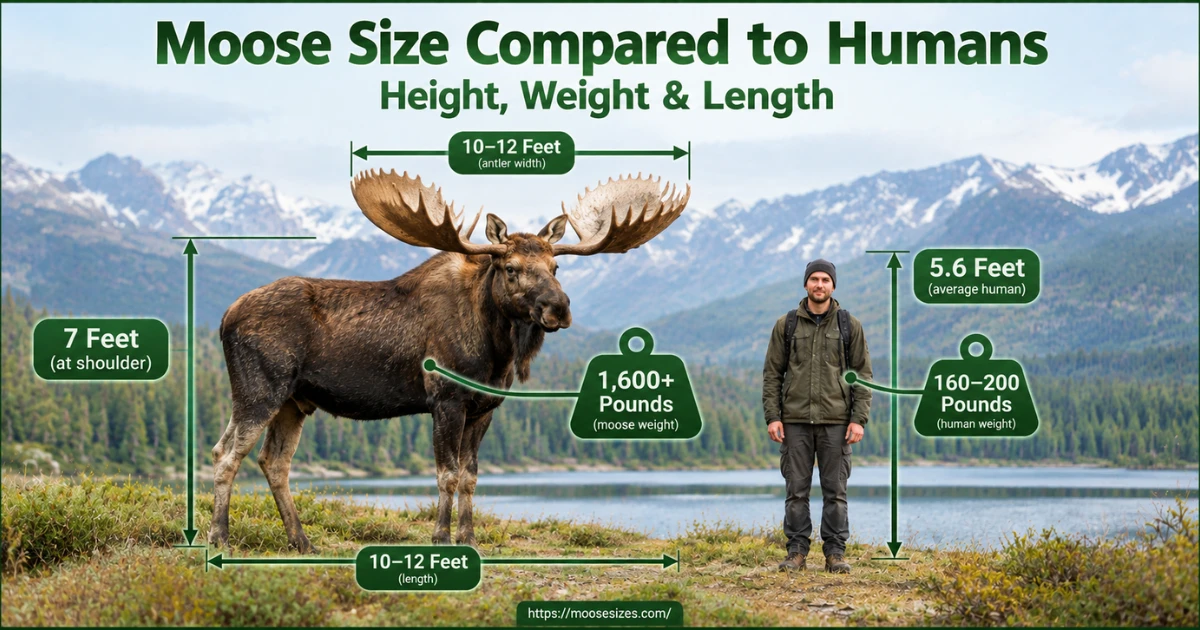
A full-grown moose can stand nearly 7 feet tall at the shoulder and weigh over 1,600 pounds. That makes an adult moose look enormous next to an average person.
When you put moose size vs human side by side, the difference is almost hard to believe. This guide breaks down exactly how a moose compares to a person in height, weight, and raw power, using real numbers, not guesswork.
How Big Is a Moose?
Average Moose Height and Weight (Bulls vs Cows)
Bull moose are built bigger for a reason: size helps them win fights during mating season, known as the rut. Cows focus their energy on raising calves instead of growing extra bulk, which is why they stay noticeably smaller.
Moose Size by Subspecies
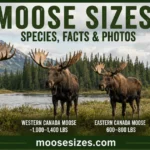
Not all moose are the same size. The Alaska moose is the largest, reaching almost 7 feet tall and over 1,600 pounds. The Shiras moose, found in the Rocky Mountains, is the smallest, usually capping out around 1,200 pounds. Eastern and Northwestern moose fall in between.
How Fast Moose Grow From Birth to Full Size
A newborn moose calf weighs about 28 pounds, roughly the size of a three-year-old child. From there, growth is explosive. Calves can gain 2 to 5 pounds a day, reaching hundreds of pounds within their first year alone.
More Posts: Bull Moose Size, Weight, Height, Length & Comparisons
Moose Size vs Human: Height Comparison
Average Moose Height vs Average Human Height
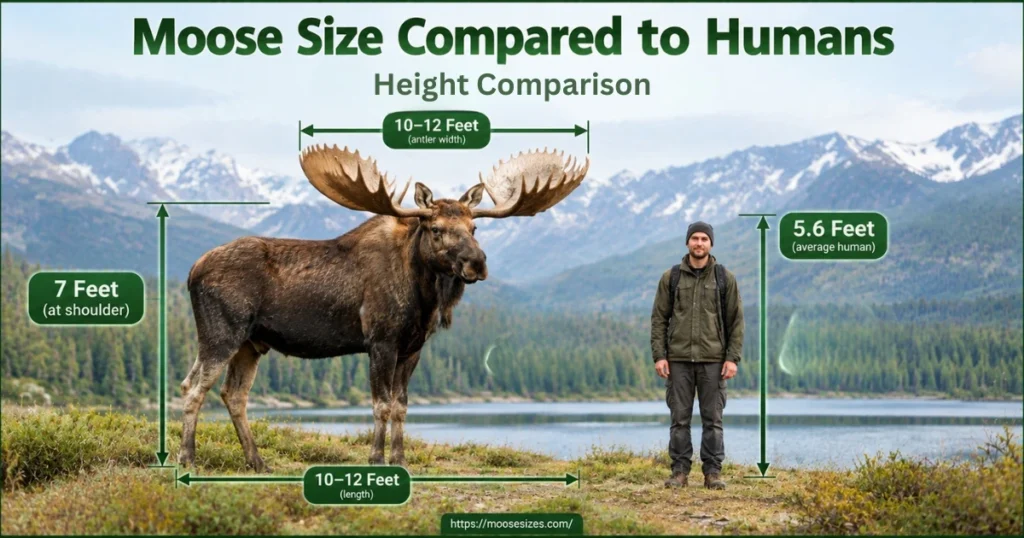
The average American man stands around 5 feet 9 inches tall. A bull moose beats that by more than a foot at the shoulder alone. Stand next to one, and you’re looking up, not across.
Tallest Moose Ever Recorded vs Tallest Human Ever Recorded
The tallest human ever recorded, Robert Wadlow, stood 8 feet 11 inches. The tallest moose on record measured about 7 feet 6 inches at the shoulder. Wadlow still wins on height, but he’s the tallest person in recorded history, while a 7-foot moose is simply an average big bull.
Moose Shoulder Height vs Human Eye Level
Here’s a detail most people miss: a moose’s shoulder height alone can reach a grown adult’s eye level. That means the animal’s head, antlers, and full body tower even higher above a person standing next to it.
More Posts: Shiras Moose Size, Weight, Height, Antlers & How It Compares to Other Moose
Moose Size vs Human: Weight Comparison
Average Moose Weight vs Average Human Weight
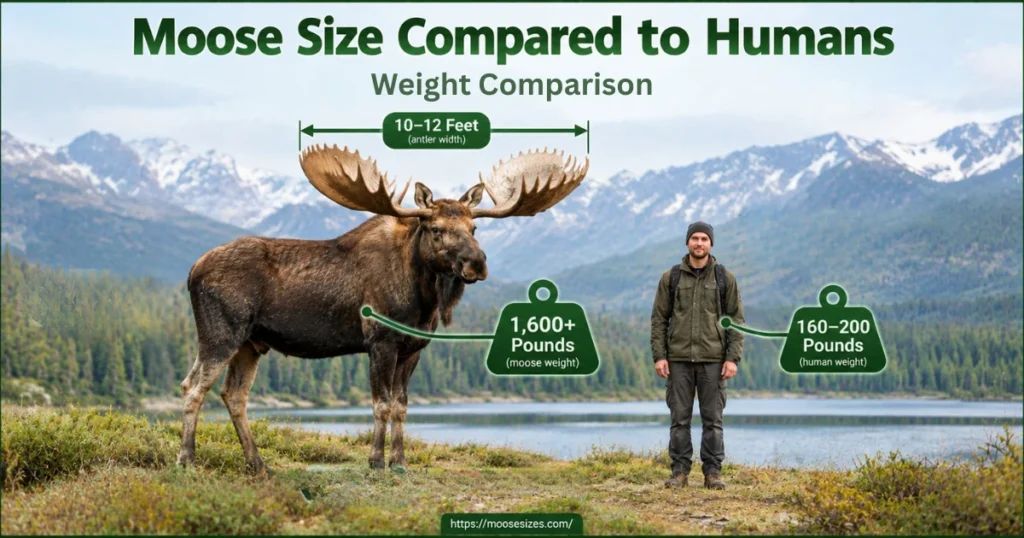
A 1,600-pound moose is roughly equal to eight average-sized men standing on a scale together. Even a smaller Shiras moose, at 1,200 pounds, still outweighs six adult humans combined.
Heaviest Moose on Record vs Heaviest Human on Record
The heaviest moose ever documented weighed 1,808 pounds, shot in Alaska in 1897. The heaviest human on record, Jon Brower Minnoch, weighed close to 1,400 pounds at his peak. That means the biggest moose ever recorded still outweighed the heaviest human ever recorded by about 400 pounds.
Moose Calf Weight vs Human Baby Weight
A newborn moose calf weighs about 28 pounds, nearly four times the weight of an average human newborn, which is closer to 7 to 8 pounds. Moose are built to grow fast because predators target calves early in life.
More Posts: Moose vs Horse Size
Moose Size Compared to Other Animals
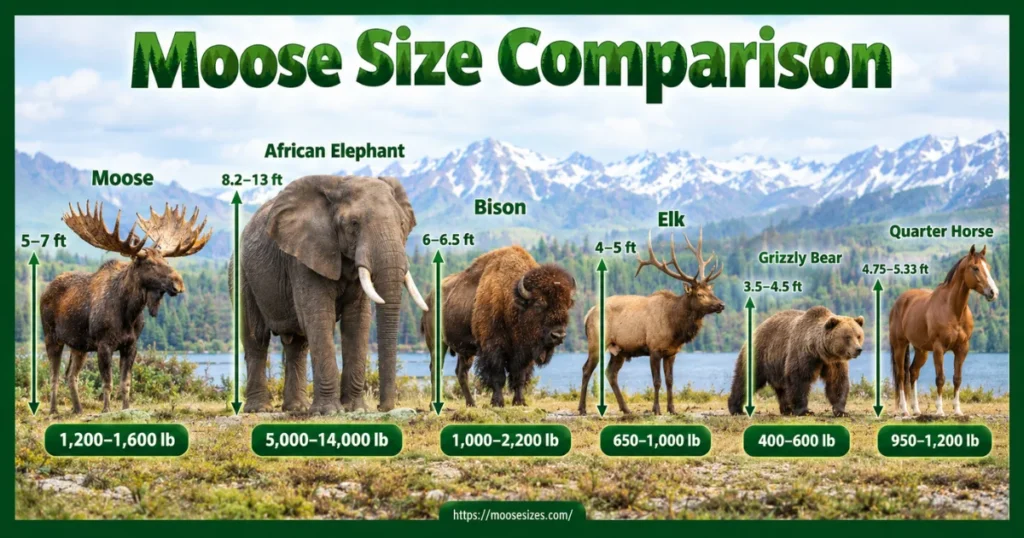
Moose vs Elephant
An African elephant dwarfs even the biggest moose, standing up to 13 feet tall and weighing as much as 14,000 pounds. Moose are giants among deer, but elephants remain in a size class of their own.
Moose vs Bison
A bison can weigh slightly more than a moose, reaching close to 2,000 pounds, but moose still win on height. Bison average about 6 feet at the shoulder, shorter than a full-grown bull moose.
Moose vs Elk
This comparison isn’t close. A large bull elk weighs around 1,000 pounds and stands about 5 feet tall. Even a smaller Shiras moose outweighs and outgrows the average elk.
Moose vs Grizzly Bear
A grizzly bear averages 400 to 790 pounds, meaning a bull moose can outweigh one by more than double. Moose height also gives them an advantage, since grizzlies often avoid direct confrontation with a full-grown bull.
Moose vs Horse
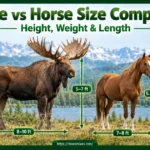
An average quarter horse weighs about 1,200 pounds, close to the size of a smaller bull moose. The largest horse ever recorded, a British shire gelding named Sampson, weighed 3,359 pounds and stood 7 feet 2.5 inches tall, just a few inches shorter than the tallest moose on record.
More Posts: Western Canada Moose Size, Weight, Height, Length & Antlers
Why Moose Size Matters
Why Moose Injure More People Than Bears Each Year
Moose aren’t naturally aggressive, but their size makes any interaction risky. In Alaska alone, moose injure an average of 5 to 10 people every year, more than grizzly and black bear attacks combined in the same state.
How to Safely React When You Encounter a Moose
Give a moose plenty of space, at least 50 feet, and never approach a cow with a calf nearby. If a moose lowers its head or lays its ears back, it’s warning you to back away.
Moose vs Human Speed
Moose can run up to 35 miles per hour in short bursts, far faster than any human. Even a five-day-old calf can outrun the average adult person, so outrunning an adult moose isn’t realistic.
More Posts: Eastern Canada Moose Size, Weight, Height, Length & Antlers
FAQ’s About Moose Size vs Human
How much bigger is a moose than a human?
A bull moose can be over a foot taller and six to eight times heavier than the average adult human.
Could a moose kill a human?
Yes, moose can cause serious injury or death if provoked, especially during the rut or when a calf is nearby.
What is the tallest moose ever recorded compared to a human?
The tallest moose measured about 7 feet 6 inches, shorter than the tallest human ever recorded at 8 feet 11 inches.
How much does a baby moose weigh compared to a human baby?
A newborn moose calf weighs about 28 pounds, nearly four times heavier than an average human newborn.

Hi, I’m Natalie Collins, the admin at MooseSizes.com. We simplify animal sizes, measurements, and wildlife comparisons with easy-to-follow guides, useful size charts, and accurate information to help you understand animal dimensions with confidence.