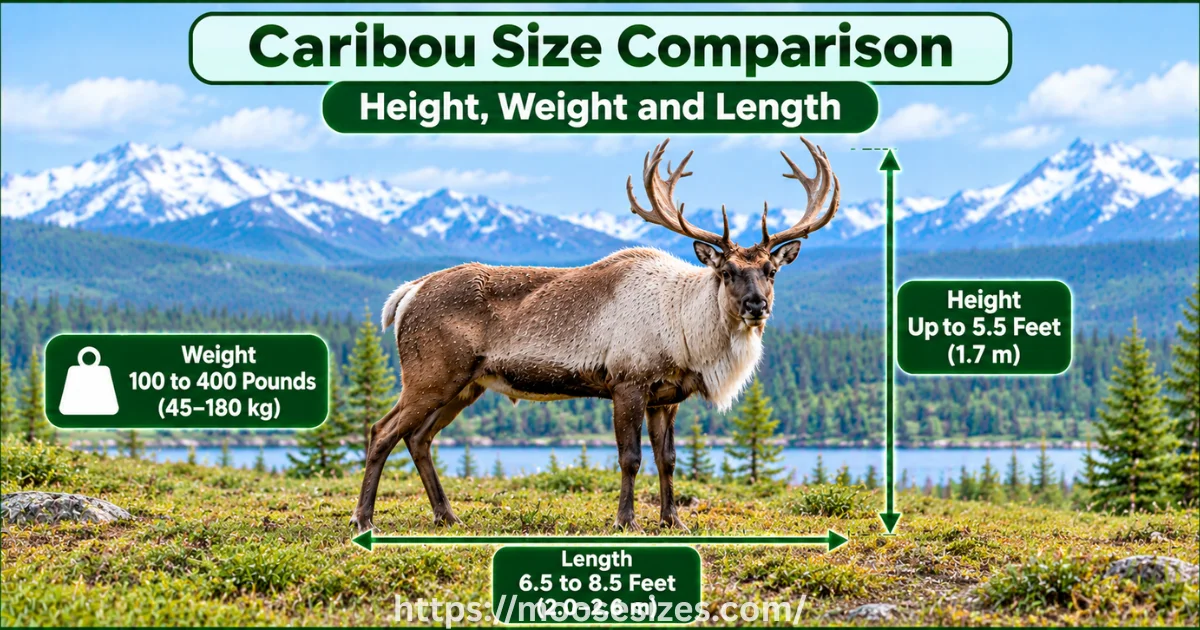
A full-grown caribou stands about 2.75 to 4.5 feet tall at the shoulder. It measures 4 to 7 feet long and weighs 132 to 705 pounds. Most adult caribou in Alaska fall in the middle of that range.
Size changes with sex, season and range. Below, you’ll find clear numbers, antler facts and easy comparisons to moose, elk, deer and more.
Caribou Height, Weight and Length Chart
| Red Deer | Weight | Shoulder Height | Body Length |
|---|---|---|---|
| Stag (typical wild) | 200–420 lbs (90–190 kg) | 3.5–4.5 ft (1.1–1.4 m) | 5.5–8.5 ft (1.6–2.6 m) |
| Stag (park-fed, top end) | up to 750 lbs (340 kg) | about 4.5 ft | 7–8.5 ft |
| Hind (female) | 140–265 lbs (63–120 kg) | 3.5–4 ft | 5.5–7 ft |
| Newborn calf | 18–33 lbs | under 2 ft | about 3 ft |
Caribou Size by Subspecies
Caribou and reindeer are one species, Rangifer tarandus. Alaska's wildlife agency lists seven subspecies. They are barren-ground, woodland, Peary, Svalbard, Greenland, European and Finnish forest.
Size changes across them. Peary caribou live on Arctic islands and are the smallest, with bulls usually under 250 pounds. Woodland caribou often have a heavier frame. Barren-ground caribou are the type most people see in Alaska.
Male vs Female Caribou Size
Bull Caribou Size
An average bull caribou weighs 350 to 400 pounds. Big bulls can hit 700 pounds.
Bulls bulk up for the fall rut. Mature males can carry more than 3 inches of fat on the back and rump. Their necks also swell in September.
Cow Caribou Size
A cow caribou is lighter. Mature females average 175 to 225 pounds. That makes a bull nearly twice as heavy as a cow.
Caribou Calf Size and Growth
A newborn caribou calf weighs about 13 pounds. It can double its weight in 10 to 15 days. Calves are born in late May or early June, and their coats range from reddish brown to dark chocolate.
What Affects Caribou Size?
Food is the biggest factor. Caribou eat willow leaves, sedges and mushrooms in summer. They switch to lichens in fall and winter.
Weight also moves with the seasons. Caribou feed hard in late summer to rebuild fat. Bulls then lose much of it during the rut. Climate, herd density and predators also shape body size.
Caribou Antler Size
How Big Are Caribou Antlers?
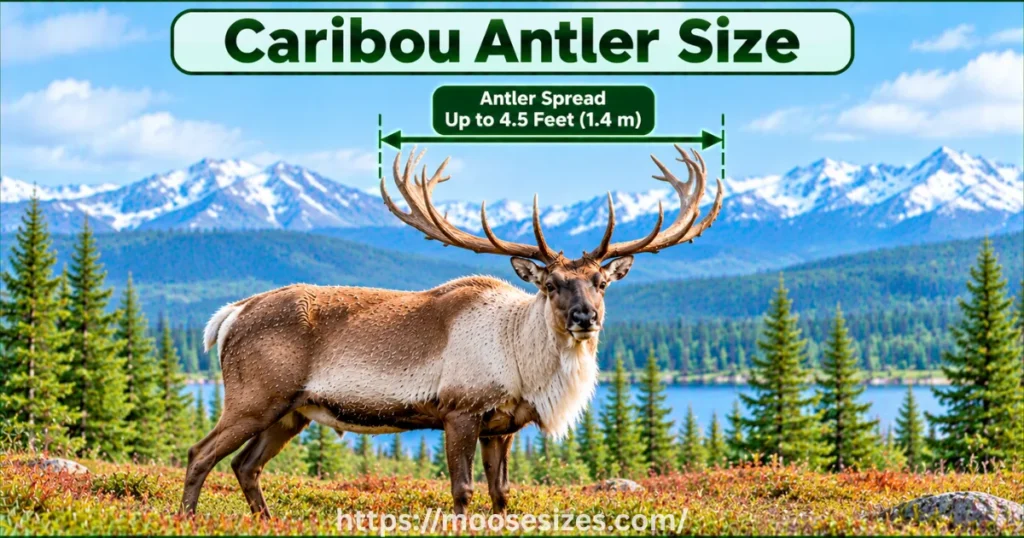
Caribou have some of the largest antlers for their body size of any deer. Bull antlers can reach about 51 inches long. They can carry up to 44 tines, which are the points on the antler.
The antlers are tall, wide and often curved forward. They look huge on a 4-foot animal.
Male vs Female Antler Size
Caribou are the only deer species where both sexes grow antlers. A bull's antlers are large and heavy. A cow's are shorter, thinner and more uneven.
When Do Caribou Shed Their Antlers?
Large bulls drop their antlers in late October. Small bulls and cows that aren't pregnant keep them until April. Pregnant cows hold on until their calves arrive in late May or early June.
That timing matters. Cows use their antlers to defend winter feeding spots.
Caribou vs Reindeer Size
Are Caribou and Reindeer the Same?
Yes. Caribou and reindeer are the same species. In North America, wild animals are called caribou. In Eurasia, they are called reindeer. In Alaska and Canada, only the semi-domesticated form carries the reindeer name.
Which Is Bigger, Caribou or Reindeer?
Neither one is always bigger. Size depends on the herd, the food and the breeding.
Herders have bred reindeer for hundreds of years. This shifts leg length, antler size, coat color and body build. Wild caribou stay closer to their natural build.
Caribou Size Comparison to Other Animals
Caribou vs Moose Size
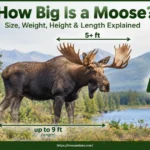
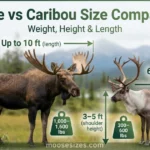
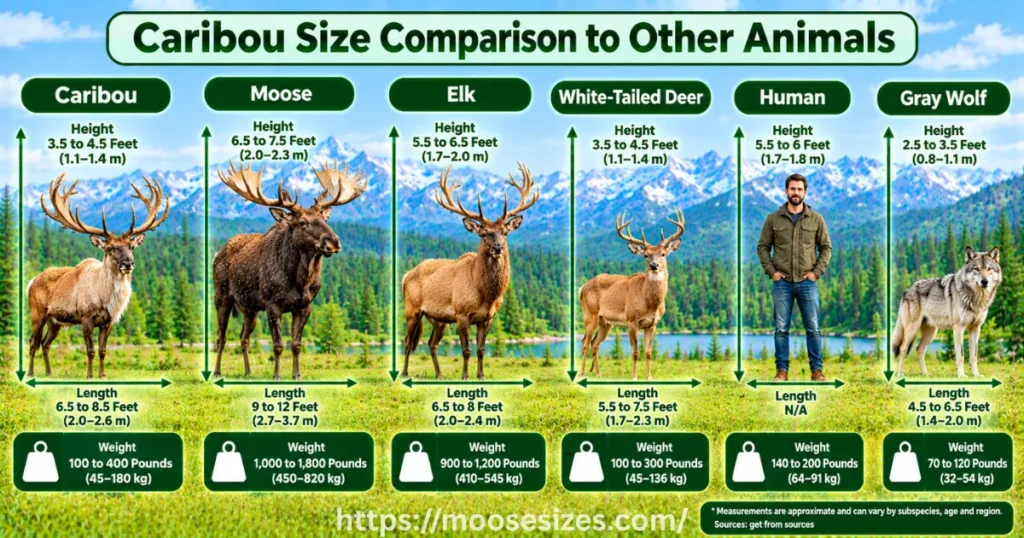
The moose is the largest deer on Earth, and it towers over a caribou. A bull moose stands about 5 to 6.5 feet at the shoulder. It measures about 7 to 10 feet long and weighs roughly 800 to 1,500 pounds. Large Alaska bulls can top that.
A caribou bull stands near 4 feet, runs about 5 to 7 feet long and weighs 350 to 400 pounds on average. A moose is often three times heavier. Moose antlers can also stretch about 6 feet across. Winner: moose, by a wide margin.
Caribou vs Elk Size
Elk are the second largest deer in North America. A bull elk weighs 600 to 1,100 pounds and stands about 5 feet at the shoulder. Its body is long and heavily built.
A caribou is lighter and shorter. Even a record 700-pound caribou only matches a mid-size elk. Cow elk also lack antlers, while cow caribou grow them. Winner: elk.
Caribou vs White-Tailed Deer Size
Most Americans know the white-tailed deer best. A buck stands about 3 feet at the shoulder and measures about 5 to 7 feet long. Most weigh 150 to 300 pounds.
A caribou bull is taller and about 100 pounds heavier on average. Its hooves are also wider and its antlers larger. Winner: caribou.
Caribou vs Human Size
Picture a caribou next to an average American man who stands about 5 feet 9 inches tall. The caribou's shoulder would reach about his chest. A big bull would outweigh him by around two to three times. Winner: caribou.
Caribou vs Gray Wolf Size
The wolf is the caribou's main predator. A male gray wolf stands about 2.5 feet at the shoulder. It measures roughly 5 to 6 feet long and weighs about 85 to 115 pounds.
A caribou bull is about three to four times heavier. Wolves win through teamwork and stamina, not size. Caribou fight back with speed, hooves and herd numbers. Winner: caribou in size, wolves in a pack.
FAQ’s About Caribou Size
How big is a full-grown caribou?
A full-grown caribou stands 2 ft 9 in to 4 ft 7 in at the shoulder. It measures 4 to 7 feet long and weighs 132 to 705 pounds.
How much does a caribou weigh?
An average bull weighs 350 to 400 pounds. A mature cow weighs 175 to 225 pounds.
How tall is a caribou at the shoulder?
Most caribou stand about 4 feet tall at the shoulder. Smaller subspecies can be under 3 feet.
Are caribou bigger than deer?
Caribou are bigger than white-tailed deer. They are smaller than elk and moose.
Are caribou bigger than moose?
No. A moose is about three times heavier and far taller. It is the largest deer in the world.
How big do caribou antlers get?
Bull antlers can reach about 51 inches long. They can carry up to 44 tines.

Hi, I’m Natalie Collins, the admin at MooseSizes.com. We simplify animal sizes, measurements, and wildlife comparisons with easy-to-follow guides, useful size charts, and accurate information to help you understand animal dimensions with confidence.