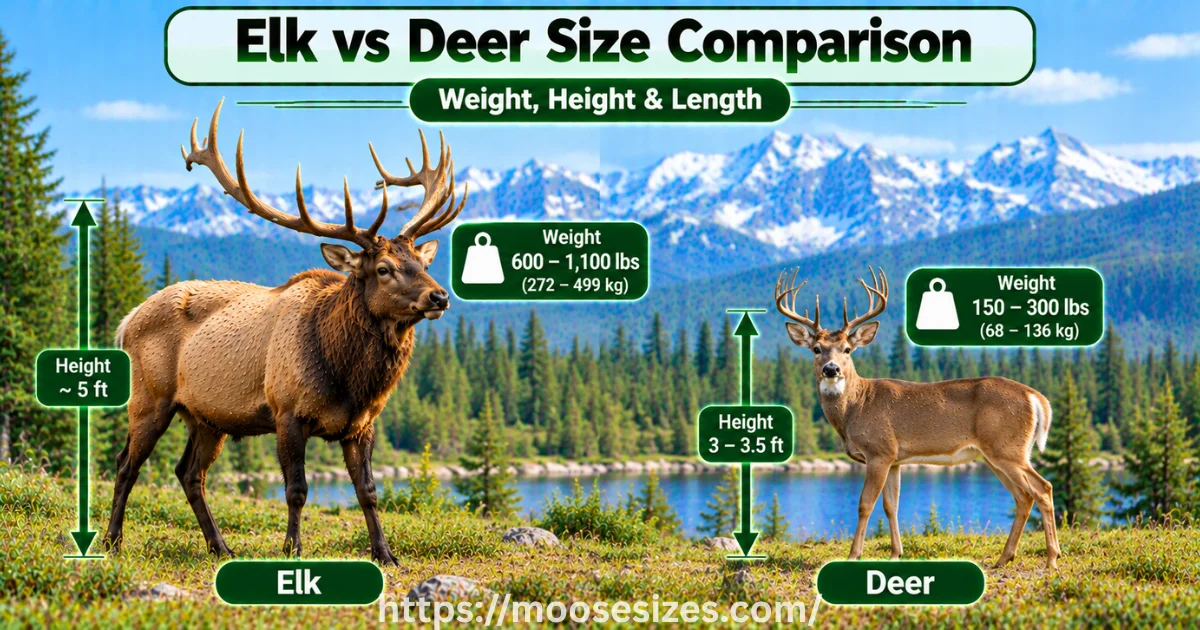
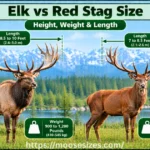
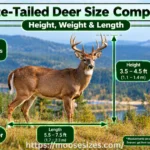
Elk are much bigger than deer. A bull elk weighs 600 to 1,100 pounds and stands about 5 feet at the shoulder. A large whitetail or mule deer buck weighs 150 to 300 pounds and stands about 3 to 3.5 feet. Below is the full elk vs deer size breakdown for the US.
Elk vs Deer Size
Animal
Weight
Shoulder Height
Body Length
Bull elk
600–1,100 lb
4.5–5 ft
7.5–9 ft
Cow elk
450–650 lb
4–4.5 ft
6.5–8 ft
Whitetail buck
150–300 lb
3–3.5 ft
5–6.5 ft
Mule deer buck
150–300 lb (big ones up to 450)
3–3.5 ft
5–6.5 ft
Elk vs Deer Weight, Height and Length
Bull Elk vs Buck Deer Size
A mature bull elk is a heavy animal. Most bulls weigh 700 to 800 pounds. The biggest can pass 1,000 pounds. They stand about 5 feet at the shoulder and run 7.5 to 9 feet from nose to tail.
A big buck deer looks small beside him. Most bucks weigh 150 to 250 pounds. They stand about 3 feet tall and run 5 to 6.5 feet long.
Winner: the bull elk, by a wide margin.
Cow Elk vs Doe Size
A cow elk is smaller than a bull, but still big. She weighs 450 to 650 pounds and stands 4 to 4.5 feet tall. Her body is 6.5 to 8 feet long.
A doe weighs 90 to 200 pounds, depending on species and region. She stands about 3 feet tall and runs 4.5 to 6 feet long.
Winner: the cow elk. She often outweighs a large mule deer buck.
Whitetail deer are the most common deer in the US. An average buck weighs about 150 to 200 pounds. In the north, big bucks can top 300 pounds. They stand 3 to 3.5 feet tall.
A bull elk can weigh as much as four whitetail bucks. He also stands about a foot and a half taller.
Winner: the elk.
Elk vs Mule Deer Size
Mule deer are the largest deer in the American West. Most bucks weigh 150 to 300 pounds. A rare giant can reach 450 pounds. They stand 3 to 3.5 feet tall and are known for their large ears.
Even a record-class mule deer is lighter than an average bull elk.
Winner: the elk.
Elk vs Deer Body Length and Build
Elk have long legs, a deep chest and a thick neck. Bulls grow a heavy dark mane in fall. The overall look is tall and powerful.
Deer have slim legs and a lighter frame. Mule deer look stocky next to whitetails. Both look small beside a full-grown elk.
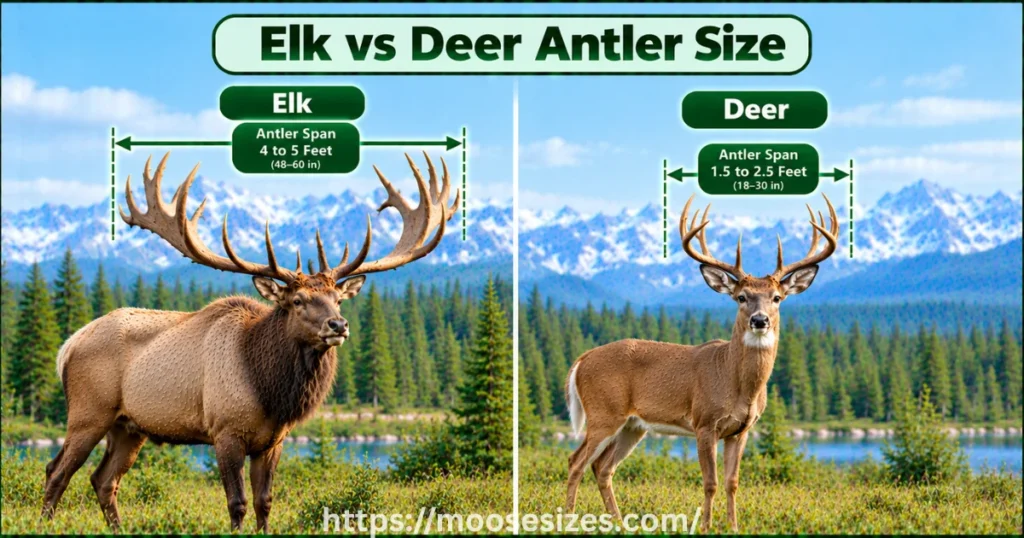
A bull elk’s main beams sweep back over his body. They can grow up to 4 feet long. A big set can spread about 4 to 5 feet.
Deer antlers grow up and forward. A whitetail’s main beams are often 18 to 25 inches long. A mule deer’s rack can spread about 25 inches or more. Mule deer antlers fork, so they look wide and branchy.
Winner: the elk.
Antler Weight and Growth Speed
A pair of elk antlers can weigh 30 to 40 pounds. That is a lot of bone to carry on the head. Elk antlers can grow up to an inch a day in summer. That makes them some of the fastest-growing animal tissue known.
A big whitetail rack weighs about 3 to 8 pounds. Deer antlers grow more slowly. Both animals shed their antlers each winter and grow a new set in spring.
A newborn elk calf weighs about 25 to 40 pounds. A newborn whitetail fawn weighs about 4 to 8 pounds.
Calves grow fast. They can gain around 2 pounds a day in their first months. By fall, a calf can outweigh a full-grown doe.
Winner: the elk calf.
Elk Subspecies Size
Four elk subspecies live in North America today. The Roosevelt elk is the biggest. Bulls can reach about 1,000 to 1,200 pounds. They live in the Pacific Northwest.
The Rocky Mountain elk is the most common. Bulls average 700 to 800 pounds. The Tule elk is the smallest. It lives in California, and bulls are often 400 to 600 pounds. The Manitoban elk is large and lives in Canada’s prairies.
Deer Species Size
Deer size changes a lot by species and region. Northern whitetails are bigger than southern ones. Columbian blacktail deer weigh about 100 to 200 pounds.
The Key deer is the smallest whitetail. It lives in the Florida Keys. It weighs about 45 to 80 pounds and stands under 3 feet tall.
Elk Size Compared to Other Animals
elk-vs-moose-vs-horse-vs-human-size
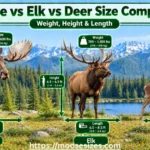
Elk vs Moose Size
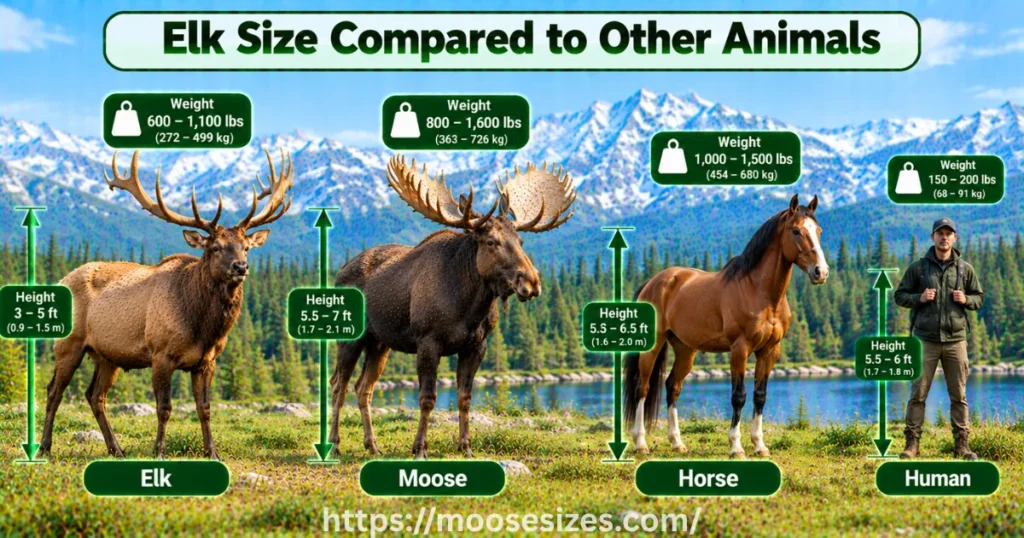
A bull moose weighs 800 to 1,500 pounds. Some Alaska bulls pass 1,800. He stands 5 to 7 feet at the shoulder and runs 8 to 10 feet long.
A bull elk weighs 600 to 1,100 pounds. He stands about 5 feet tall and runs 7.5 to 9 feet long.
Winner: the moose. He is the largest member of the deer family.
Elk vs Horse Size
An average horse weighs 900 to 1,200 pounds. It stands about 4.8 to 5.7 feet at the shoulder. It runs about 8 feet from nose to tail.
A bull elk is close in height and length. He is often lighter, at 600 to 1,100 pounds.
Winner: a tie in height and length. Horses are usually heavier.
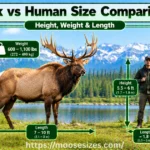
Elk vs Human Size
The average American man is about 5 feet 9 inches tall and weighs about 200 pounds. A bull elk’s shoulder is about as high as a tall person’s chin or eyes. With his head and antlers up, he can reach 8 to 9 feet.
He also weighs about four times more than the average man.
Hi, I’m Natalie Collins, the admin at MooseSizes.com. We simplify animal sizes, measurements, and wildlife comparisons with easy-to-follow guides, useful size charts, and accurate information to help you understand animal dimensions with confidence.